


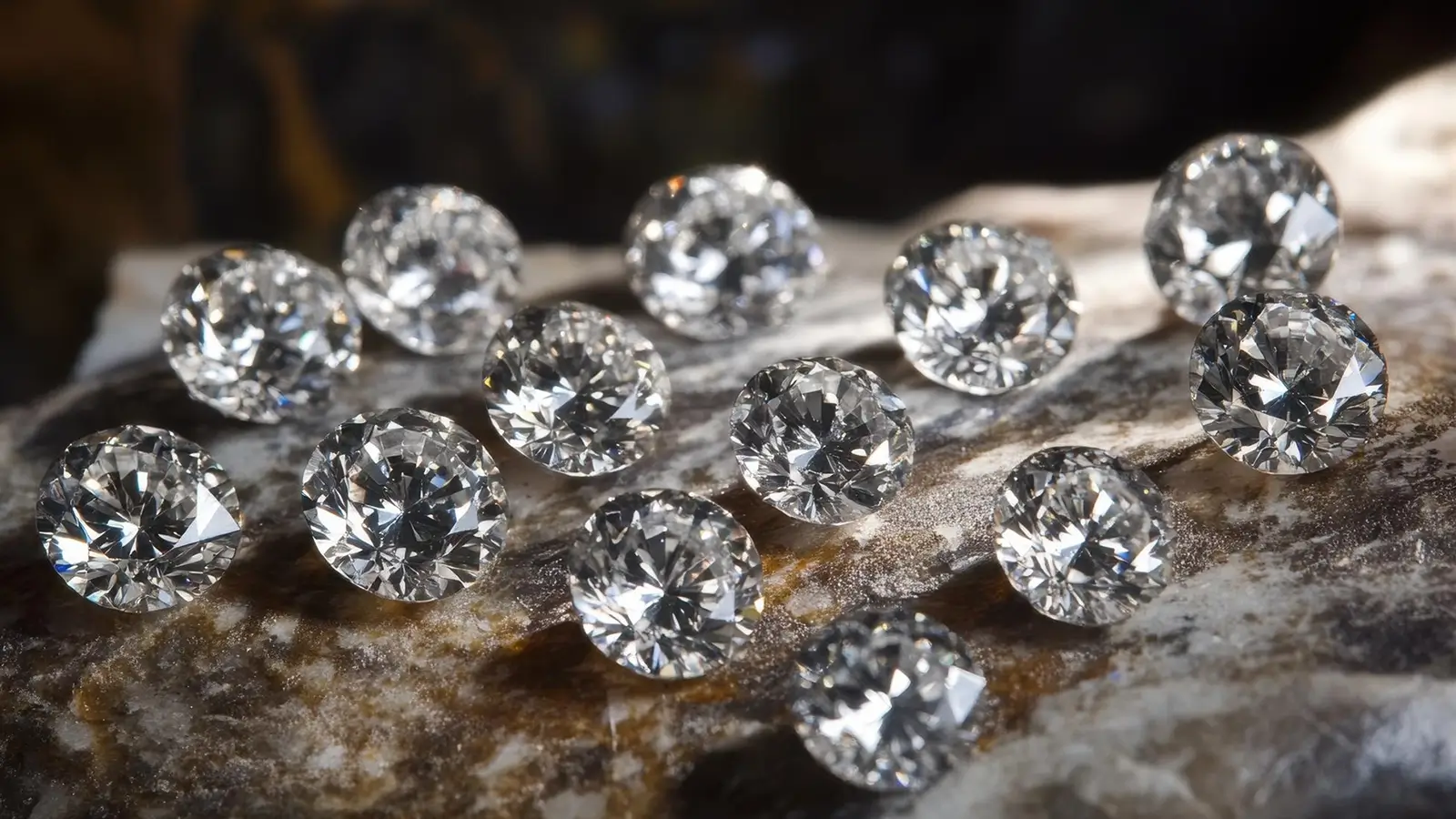
- Diamonds resell at 20 to 50 percent of retail — understanding this prevents disappointment and sets realistic expectations
- GIA-certified diamonds consistently command better offers from specialist buyers
- The four Cs (Carat, Cut, Color, Clarity) determine diamond value — learn them before any negotiation
- Specialist buyers like JS Diamonds INC outpay pawn shops and general jewelers for quality stones
- Loose diamonds and jewelry-set diamonds can both be sold in a single appointment with same-day payment
- Getting multiple offers from different buyers is the single most effective strategy for any diamond sale
- The Diamond Resale Reality: Setting the Right Expectations
- The Four Cs: How Diamonds Are Valued
- Types of Diamonds You Can Sell
- Where to Sell Diamonds: Comparing Your Options
- Preparing Your Diamond for Sale
- What Drives the Best Diamond Offers
- Avoiding Scams and Lowball Offers
- Diamond Prices and the Current Market
- Selling Your Diamond at JS Diamonds INC
- JS Diamonds INC: Diamond Buyers Across the United States
- Related Reading
- Frequently Asked Questions
Selling a diamond is one of the more complex transactions in the personal asset market. Unlike gold, which has a transparent daily spot price that any seller can check in seconds, diamond values are determined by a combination of four quality parameters, current market demand, buyer network access, and the negotiating skills of both parties.
At JS Diamonds INC, we have been purchasing diamonds in New York for decades, working with sellers who range from first-time estate inheritors to experienced private collectors. This guide distills everything we know about how to sell diamonds successfully, fairly, and without regret.
1. The Diamond Resale Reality: Setting the Right Expectations
The most important thing to understand before selling a diamond is the retail-to-resale gap. A diamond purchased at a retail jewelry store for $10,000 will not sell on the secondary market for anything close to that figure. The range for most quality diamonds is 20 to 50 percent of the original retail purchase price, with higher-quality, well-certified stones trending toward the upper end of that range.
This is not a flaw in the market or evidence of dishonest buyers. It reflects the reality that retail jewelry pricing includes significant overhead: store rent in premium locations, marketing budgets, sales staff commissions, insurance, and brand premiums that evaporate the moment a piece leaves the store. The secondary market, like the wholesale diamond trade, operates on fundamentally different economics.
Understanding the retail-to-resale gap protects you from unrealistic expectations and helps you recognize a fair offer when you receive one. A specialist buyer offering 40 percent of the retail price for a quality certified stone is likely giving you an honest market rate, not lowballing you.
With that foundation set, the strategies in this guide will help you achieve the best offer within the realistic secondary market range for your specific stone.
2. The Four Cs: How Diamonds Are Valued
The Gemological Institute of America established the Four Cs framework that is now the universal standard for diamond grading. Every reputable buyer uses these four parameters to evaluate your stone. Understanding them gives you the vocabulary to evaluate any offer intelligently.
| The C | What It Measures | Impact on Value | Key Ranges |
|---|---|---|---|
| Carat Weight | Physical weight of the stone (1ct = 0.2g) | Very High — price per carat rises exponentially at weight thresholds | Under 0.5ct, 0.5-0.99ct, 1ct+, 2ct+, 3ct+ |
| Cut | Quality of proportions, symmetry, and polish | High — determines how much light the diamond returns (its brilliance) | Ideal/Excellent, Very Good, Good, Fair, Poor |
| Color | Presence or absence of yellow/brown tint | High — colorless diamonds (D-F) command significant premiums | D-F colorless, G-J near colorless, K-M faint, N+ yellow |
| Clarity | Presence and visibility of inclusions and blemishes | Moderate to High — eye-clean threshold is key for buyers | FL/IF, VVS1/VVS2, VS1/VS2, SI1/SI2, I1/I2/I3 |
Carat weight has the greatest single impact on resale value because it most directly determines the pool of buyers interested in your stone. Diamonds below 0.50 carats have limited individual resale value regardless of quality. Stones above 1 carat attract substantially more buyers, and stones above 2 carats enter a premium tier where specialist buyers have access to high-net-worth clients who pay meaningfully more. Explore our loose diamonds page to understand how we categorize stones for buying purposes.
3. Types of Diamonds You Can Sell
Understanding which type of diamond you have affects which buyer is appropriate and what selling strategy will yield the best result.
Loose Diamonds
Loose stones without a setting are the simplest to evaluate accurately and typically yield the cleanest, fastest offers. A buyer can weigh the stone precisely, examine it under magnification, and compare characteristics against the certificate without any interference from a setting. Visit our sell loose diamonds page for current buying criteria and our sell loose diamonds online service if you are outside the New York area.
Diamond Engagement Rings
By far the most common diamond selling situation. The center stone is evaluated separately from the setting. A specialist buyer removes the diamond for accurate evaluation and weighs the gold or platinum setting as scrap metal. Our diamond ring buying service handles this routinely with single-appointment, same-day payment.
Diamond Jewelry (Earrings, Bracelets, Pendants)
Diamond earrings, tennis bracelets, and pendant necklaces are evaluated on the total diamond weight and quality alongside the precious metal content. Our diamond jewelry buying service covers all jewelry-mounted diamond pieces.
Antique Cut Diamonds
Old Mine Cut and Old European Cut diamonds from the late 19th and early 20th centuries can command collector premiums from buyers who specifically seek period stones. Our Old Mine Cut diamond guide explains the market for these antique stones in detail.
Wholesale and Estate Lots
For sellers with multiple stones, our wholesale diamond buying service handles estate collections and trade lots with efficient, consolidated evaluation and payment.
Get an Expert Diamond Evaluation Today
Bring any diamond to JS Diamonds INC for a free, professional assessment by our diamond specialists. Loose stones, set pieces, estate collections — we evaluate everything with no obligation to sell.
4. Where to Sell Diamonds: Comparing Your Options
The secondary diamond market offers several channels, each with meaningfully different payout rates, transaction speeds, and risk profiles.
Specialist Diamond Buyers (Recommended)
Buyers who specialize in diamonds and fine jewelry have direct trade network access, which allows them to offer more than general buyers who cannot efficiently resell the stones they purchase. JS Diamonds INC regularly purchases diamonds for our own inventory, for trade partners, and for our network of direct buyers, enabling us to offer genuinely competitive prices. See our primary sell diamonds service page for full detail on our process.
Auction Houses
Major auction houses like Sotheby’s and Christie’s achieve remarkable prices for exceptional stones but charge seller’s commissions of 10 to 20 percent and require minimum quality thresholds. For most individual diamonds, auction is not practical and the commission structure erodes the final payout significantly.
Online Diamond Buyers
Services like Worthy and I Do Now I Don’t provide auction-style platforms for diamond selling. They can achieve fair prices for quality certified stones but the process takes weeks, involves shipping your diamond, and comes with fees. Our sell diamonds online guide compares online and in-person options in detail.
Pawn Shops
Pawn shops are the least favorable option for diamonds. Most pawn operators lack the gemological expertise to properly evaluate diamond quality and offer blanket low percentages of perceived value to protect themselves from uncertainty. For quality diamonds, pawn shop offers can be 20 to 40 percent below specialist buyer rates.
Private Sales
Selling directly to another individual through platforms like Craigslist or Facebook Marketplace eliminates the buyer’s margin but introduces significant risk: no payment security, no professional oversight, and a very limited buyer pool for higher-value stones.
5. Preparing Your Diamond for Sale
Preparation before your appointment with a buyer consistently produces better outcomes. These steps take minimal time but can meaningfully impact both the offer you receive and the confidence with which you negotiate.
Locate Any Existing Certificates
GIA, AGS, EGL, and IGI certificates document your diamond’s measured characteristics independently. A GIA certificate is the gold standard. If you have one, bring it. If you do not, a specialist buyer will evaluate the stone on the spot — but the certificate adds negotiating credibility, especially for larger stones.
Research Recent Sale Prices
Rapaport Diamond Report prices (the industry wholesale benchmark) are subscription-based but second-hand references to recent market conditions are available through industry publications and diamond market tracking resources. Understanding the wholesale benchmark range for your stone’s approximate characteristics gives you a floor for evaluating any offer.
Clean Your Diamond
A clean stone shows its characteristics clearly and allows a buyer to accurately assess color and clarity. Clean diamonds gently with warm water and mild dish soap. Avoid ultrasonic cleaners for stones with known inclusions as vibration can extend existing fractures.
Get Multiple Offers
Visit at least two specialist buyers. For diamonds valued above $5,000, three or more offers provides meaningful negotiating leverage. Mention that you are getting competitive quotes — reputable buyers expect this and it often results in improved offers. Our buyer team at JS Diamonds INC in NYC consistently outperforms competitors on quality certified stones.
6. What Drives the Best Diamond Offers
Beyond the four Cs, several factors influence whether a buyer can offer at the high or low end of the realistic price range for your stone.
GIA Certification
A GIA-graded stone eliminates evaluation uncertainty for buyers. They can price against a known, independently verified set of characteristics rather than their own assessment, which carries residual uncertainty. This uncertainty reduction translates directly into higher offers. For stones above 1 carat, the difference between certified and uncertified offers can be 15 to 25 percent.
Cut Quality
Excellent or Ideal cut diamonds sell most quickly in the resale market because buyers know they will find ready demand. A well-cut 1 carat stone in the I color, SI1 clarity range consistently outperforms a poorly cut stone of superior color and clarity because the trade market prioritizes visual performance that buyers can immediately appreciate.
Buyer’s Current Inventory
Diamond buyers are also inventory managers. If a buyer is currently long on 1 carat F color stones, they may offer less for another one regardless of quality. This is another reason to get multiple offers — different buyers have different current needs.
Shape
Round brilliant cuts consistently achieve the best secondary market offers because they have the deepest and most liquid buyer pool. Fancy shapes (oval, cushion, pear, emerald, marquise) can achieve excellent prices for exceptional specimens but have narrower buyer pools in the secondary market.
7. Avoiding Scams and Lowball Offers
The diamond selling market has its share of bad actors, particularly in busy urban markets where sellers may feel pressured by time or circumstance. Recognizing the warning signs protects you.
High-Pressure Tactics
A legitimate buyer will never pressure you to accept an offer immediately or claim the price is only valid for the next five minutes. This is a standard manipulation tactic. Walk away from any buyer who uses time pressure on a non-volatile commodity like diamonds.
Refusal to Show Evaluation Details
If a buyer gives you a number without explaining how they arrived at it, ask for the breakdown. A trustworthy buyer shows you the weight, their grading assessment, and the market reference they used for pricing. No explanation means no accountability.
Offers Far Below Any Other Buyer
If one offer is dramatically lower than others, it is almost certainly not because the other buyers are all wrong. The outlier buyer either lacks the expertise to properly evaluate your stone or is deliberately undervaluing it hoping you will accept out of convenience.
Switching to a Different Stone
Though rare, substitution scams do occur in the diamond market. Never leave a stone with a buyer who asks to evaluate it privately. All evaluation should occur in your presence. Our team at JS Diamonds INC evaluates every stone with the seller present throughout the entire process.
8. Diamond Prices and the Current Market
The diamond market in 2025 and 2026 has experienced notable shifts driven by the growth of lab-grown diamonds as a consumer option, which has softened demand for lower-quality natural diamonds in the sub-1-carat range. However, natural diamonds above 1 carat in quality grades have maintained strong buyer demand, particularly from international buyers and high-net-worth individuals in the US market.
For sellers, the current market dynamics mean that quality matters more than ever. A 0.50-carat I color SI2 clarity diamond faces more competition from lab-grown alternatives than a 2-carat G color VS1 clarity stone, which remains firmly in the natural diamond premium tier.
Lab-grown diamond prices have declined dramatically, but this has not significantly impacted the resale value of quality natural diamonds above 1 carat. The natural diamond premium in the upper quality tiers is actually wider than it was five years ago as the distinction between natural and lab-grown becomes more commercially significant.
For detailed current pricing context, our diamond price market insights article covers how global market conditions translate to secondary market offer rates for sellers in 2026.
9. Selling Your Diamond at JS Diamonds INC
Our diamond buying process is built around the seller’s experience: transparent, fast, and fair from first contact to payment. Here is exactly what to expect.
- Schedule or Walk In: Book a consultation at our New York location or walk in during business hours. Bring your diamond, any certificates, and any prior appraisals if available.
- Professional Examination: Our gemologist examines the stone under magnification, measures precise dimensions and weight, and grades it against the four Cs parameters. All evaluation happens in front of you.
- Market-Referenced Offer: We cross-reference our evaluation against current Rapaport price data and our own live buyer network to arrive at the most competitive offer we can make for your specific stone.
- Written Offer with No Pressure: You receive a written offer valid for a reasonable period. Compare it against other buyers. Ask questions. Take time if you need it.
- Same-Day Cash Payment: Upon acceptance, payment is made immediately. No wire delays, no processing time. Visit our same-day cash payment guide for details on how this works.
We buy diamonds of all types: loose stones, engagement rings, jewelry-set diamonds, and wholesale estate lots. Our sell diamonds for cash service is available for sellers needing fast liquidity without sacrificing on price.
10. JS Diamonds INC: Diamond Buyers Across the United States
Our primary location serves New York City and the surrounding metropolitan area, but we work with diamond sellers from across the country through our NYC selling center and network partnerships.
- Diamond Buyers NYC
- NYC Diamond Buyers
- Best Place to Sell Diamonds in NYC
- Diamond Buyers Upper East Side
- Diamond Buyers Upper West Side
- Diamond Buyers West Village NYC
- Diamond Buyers Greenwich Village
- Diamond Buyers Tribeca and SoHo
- Diamond Buyers Brooklyn Heights
- Diamond Buyers Park Slope
- Diamond Buyers Queens
- Diamond Buyers Bronxville and Westchester
11. Related Reading
12. Frequently Asked Questions
How much can I expect to get when I sell a diamond?
Most diamonds resell for 20 to 50 percent of their original retail purchase price. Higher-quality, GIA-certified stones above 1 carat in desirable shapes and grades tend toward the upper end of this range. Uncertified, small, or lower-quality stones trend toward the lower end. Our specialists at JS Diamonds INC provide a specific, market-based offer for your stone in a single free appointment.
Do I need a GIA certificate to sell my diamond?
No certificate is required, but a GIA certificate significantly improves your negotiating position and typically yields higher offers. If your diamond lacks a certificate, we evaluate it on-site using professional grading standards. For high-value stones above 1 carat, obtaining a GIA report before selling if you do not already have one can pay for itself in the improved offer you receive. Learn more about our evaluation process on our sell diamonds page.
What is the best place to sell a diamond in New York?
Specialist diamond buyers with direct trade network access offer the best combination of competitive pricing and transaction speed. JS Diamonds INC is among New York’s most established diamond buyers, with locations accessible from the Upper East Side, Tribeca and SoHo, and throughout the metropolitan area. Visit our best place to sell diamonds NYC guide for a full comparison.
Can I sell a diamond that is still set in a ring?
Absolutely. Our specialists evaluate diamonds in settings and remove the stone for precise measurement during the assessment. The gold or platinum setting is weighed separately and valued as precious metal. You receive a single combined offer for both the diamond and the setting at one appointment. See our diamond ring buyers page for details on how we handle set pieces.
Why do diamonds sell for much less than their retail price?
Retail jewelry pricing includes substantial overhead — store rent in premium locations, marketing, sales staff commissions, insurance, and brand premium. None of these are recoverable on resale. The secondary market operates closer to wholesale pricing where stones are valued on their intrinsic gemological characteristics. This gap is not unique to diamonds; it applies to most luxury goods. Our trade-in vs cash sale guide discusses whether a trade-in arrangement might yield better effective value in some situations.
Does diamond shape affect resale value?
Yes, significantly. Round brilliant cut diamonds have the deepest secondary market buyer pool and consistently achieve the best offers relative to their quality grade. Fancy shapes (oval, cushion, pear, marquise, emerald) have narrower buyer pools but exceptional specimens in premium sizes can achieve strong prices. Our specialists evaluate shape premium and discount accurately for every stone.
How long does it take to sell a diamond at JS Diamonds INC?
The entire process — evaluation, offer, decision, and payment — typically takes one appointment of approximately 30 to 60 minutes for individual stones, longer for estate collections. Same-day cash payment is standard upon acceptance. There is no shipping, no waiting, and no processing delay. Book your appointment here to get started.
Should I sell a loose diamond or keep it set in jewelry?
Loose diamonds allow for more precise evaluation and may yield marginally better offers, but keeping a diamond in its setting will not significantly reduce a reputable buyer’s offer. The evaluation process for set diamonds is well-established and our specialists can assess the stone accurately in virtually any setting. If you are considering resetting the stone in a new piece, our stone recutting and redesign service provides an alternative to outright sale.
