


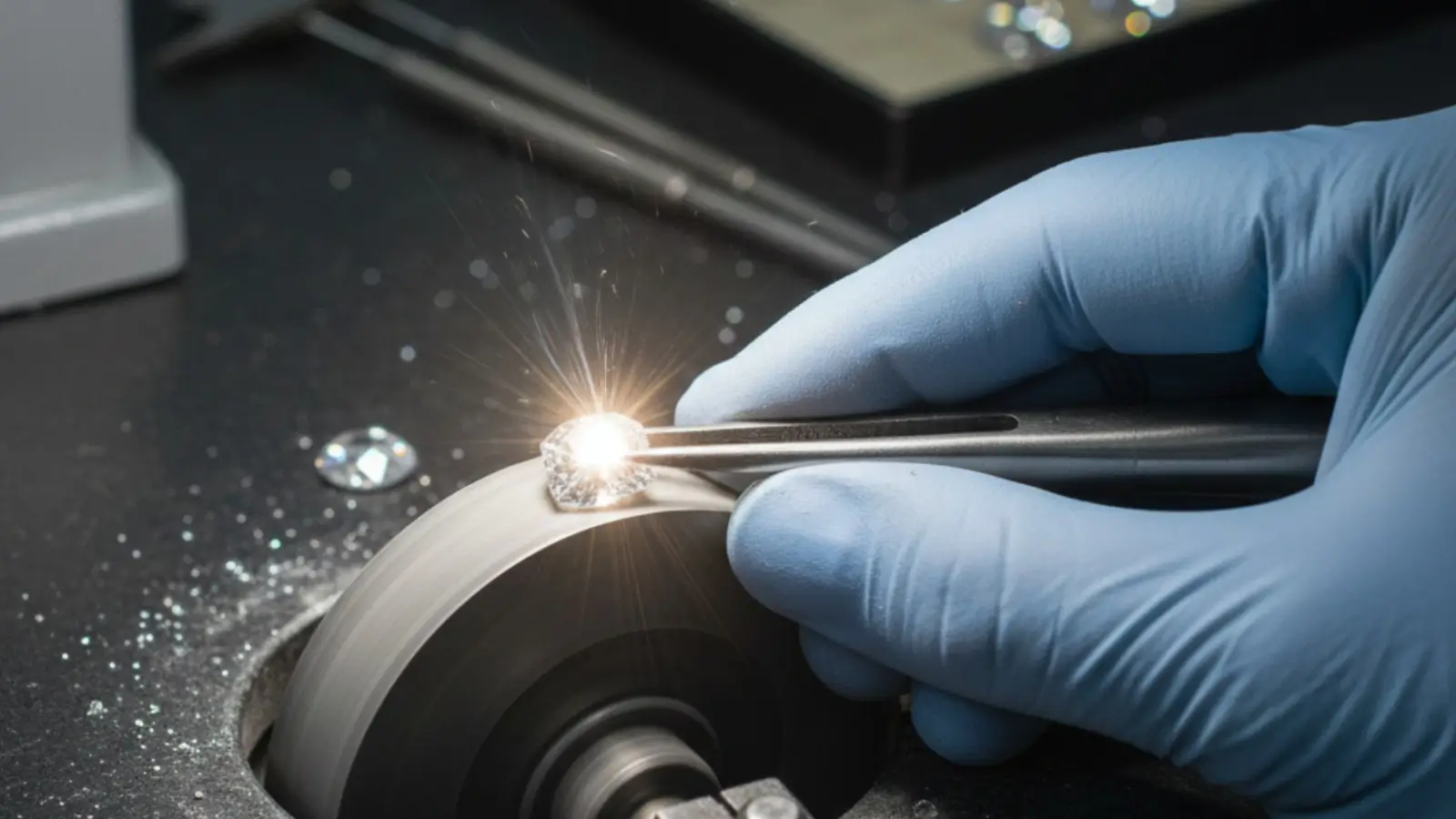
- Stone recutting is the process of reshaping or repolishing a diamond to improve its cut quality, brilliance, and appearance.
- Old mine cut and old European cut diamonds are the most common candidates for recutting to modern brilliant standards.
- Recutting reduces carat weight but can significantly increase the stone’s per-carat value and visual appeal.
- Chipped, abraded, or poorly proportioned diamonds often regain significant beauty and market value through a skilled recut.
- The decision to recut should weigh the stone’s sentimental value, current quality, and cost of the process against the expected improvement.
- JS Diamonds Inc offers professional stone recutting services and free consultations for all old diamond assessments.
- What Is Stone Recutting?
- How the Recutting Process Works
- Types of Diamond Recuts
- Old Mine Cut and Old European Cut Diamonds
- When Recutting Is the Right Decision
- Understanding Carat Weight Loss
- Cost of Diamond Recutting
- Recutting vs. Trading In Your Old Diamond
- Value Changes After Recutting
- JS Diamonds Inc Serves Customers Nationwide
- Related Reading
- Frequently Asked Questions
Hidden within many antique jewelry boxes and inherited ring collections are diamonds that were cut decades or even centuries ago using methods that bear little resemblance to modern diamond cutting technology. These old stones often appear dull or lifeless compared to today’s brilliants, not because the diamond itself is inferior, but because the cut does not reflect light the way contemporary cuts do. Stone recutting is the process of transforming these older diamonds into brilliantly performing gems through the skilled removal and reshaping of the stone.
At JS Diamonds Inc, we offer professional stone recutting services alongside expert consultation to help you determine whether recutting, resetting, or trading in your old diamond is the right choice for your specific stone and situation.
1. What Is Stone Recutting?
Stone recutting refers to the process of taking an existing gemstone, most commonly a diamond, and altering its shape, facet arrangement, or surface quality using professional lapidary equipment. This can range from a simple re-polish that removes surface scratches and restores luster, to a full recut that completely changes the stone’s shape and facet structure.
Unlike buying a new diamond, recutting works with material you already own. The process physically removes stone material, which reduces the carat weight. However, the improvement in cut grade, symmetry, and light performance can dramatically increase the stone’s visual appeal and in many cases its market value per carat.
The concept of recutting is not new. Diamonds have been recut for centuries as cutting technology evolved. When round brilliant cuts became the standard in the early 20th century, many older stones were recut from rose cuts and table cuts to take advantage of the new techniques. The same transformation opportunity exists today for modern owners of antique diamonds.
2. How the Recutting Process Works
The recutting process begins with a detailed assessment of the existing stone. A professional gemologist or cutter examines the stone’s current cut quality, symmetry, proportions, clarity, and any damage such as chips, abrasions, or feathers near the surface. Based on this assessment, the cutter maps out the optimal recut plan that maximizes brilliance while minimizing weight loss.
Planning the Recut
Before any cutting begins, the cutter plots the new facet positions using 3D modeling software or by hand for master cutters. This planning phase is critical because it determines the exact final shape, size, and proportions of the finished stone. A well-planned recut minimizes unnecessary weight loss and positions the new facets for optimal light return.
The Cutting and Polishing Phases
The actual cutting uses a specialized diamond-tipped saw or laser to adjust the stone’s girdle and table. Individual facets are then cut and polished using a polishing wheel embedded with diamond dust. The process is painstaking and requires the expertise of a master cutter. Each facet must be placed and polished to precise angles to achieve the light performance targets of modern cut grades.
3. Types of Diamond Recuts
Not all recutting projects are the same. The type of recut performed depends on the current state of the stone and the desired outcome. Understanding the different categories helps you know what to expect when you bring an old diamond in for assessment.
| Recut Type | What It Involves | Weight Loss | Best For |
|---|---|---|---|
| Re-polish only | Surface scratch and abrasion removal | Minimal (under 1%) | Slightly worn stones with no structural issues |
| Facet repair | Recut damaged or chipped facets | Low (1-5%) | Stones with localized chip or abrasion damage |
| Shape conversion | Change from one shape to another | Moderate to High (10-30%) | Old cuts being converted to modern round or fancy shapes |
| Full recut | Complete recut to modern proportions | High (15-40%) | Old mine or old European cuts being modernized |
| Clarity improvement | Recut to remove surface-reaching inclusions | Moderate (5-20%) | Stones where key inclusions are near the surface |
4. Old Mine Cut and Old European Cut Diamonds
Two historical cut styles dominate the recutting conversation: the old mine cut and the old European cut. Both were popular in the 18th through early 20th centuries and are commonly found in antique and estate jewelry. Understanding what makes these cuts distinctive explains why recutting is often considered for them.
Old Mine Cut
Old mine cut diamonds are the predecessors of the modern round brilliant. They have a cushion-shaped outline, a small table facet, a large culet (the bottom facet), high crown angles, and open culet that appears as a circle when viewed from the top. Their proportions do not optimize light return by modern standards, but many collectors treasure their romantic, antique appearance.
Old European Cut
The old European cut is a precursor to the modern round brilliant with a circular outline, 58 facets, a high crown, and a large, open culet. It was cut by hand using early mechanical tools and does not achieve the light performance of a modern excellent cut round brilliant. However, its vintage character and warm fire are highly prized by collectors. Recutting an old European to a modern round brilliant can dramatically increase brilliance but erases the stone’s historical character.
Have an Old Diamond You Want Assessed?
JS Diamonds Inc provides free, expert assessments for old mine cuts, European cuts, and all antique diamonds. Find out whether recutting, resetting, or selling is the right move for your stone.
5. When Recutting Is the Right Decision
Recutting makes the most sense in specific circumstances where the stone’s improvement in quality or market value justifies the cost and weight loss. The following scenarios are the strongest candidates for recutting.
Visible Chips or Surface Damage
A chipped diamond is not ruined. Depending on the location and severity of the chip, a skilled cutter can often recut the facets adjacent to the chip to remove it entirely, restoring the stone’s clean appearance. This is one of the clearest cases where recutting delivers obvious, immediate value.
Poor Light Performance in an Old Cut
If you own an old mine or old European cut diamond and want it to perform with modern brilliance, a full recut to a round brilliant or cushion brilliant achieves this. The resulting stone will often appear larger than its carat weight suggests because the improved cut allows light to exit through the top rather than leaking out the sides and bottom.
Upgrading a Clarity Grade
If a diamond has a visibility-affecting inclusion near the surface, a strategic recut can sometimes remove or relocate that inclusion below the surface, improving the stone’s clarity grade from SI1 to VS2, for example. This clarity improvement can significantly increase the stone’s market value, often exceeding the cost of the recut many times over.
6. Understanding Carat Weight Loss
Weight loss is the most significant practical consequence of any recutting project and must be understood before proceeding. For most full recuts of old mine or old European cuts, expect a weight reduction of approximately 15% to 40% depending on the current proportions of the stone and how aggressively it needs to be corrected to achieve modern ideal proportions.
Always ask your cutter to provide an estimate of expected weight loss before the recut begins. At JS Diamonds Inc, our stone recutting consultations include a detailed projection of likely weight loss so you can make a fully informed decision. This ties directly to the decision about whether recutting or trading the stone in through our jewelry trade-in program makes more financial sense.
7. Cost of Diamond Recutting
Diamond recutting costs vary based on the size of the stone, the complexity of the recut, and the expertise of the cutter. A simple re-polish for a small diamond typically costs between $50 and $150. A minor facet repair on a one-carat stone might run $200 to $500. A full recut of a significant antique diamond from old mine to modern round brilliant can cost $500 to $2,000 or more for a skilled master cutter.
Is the Cost Justified?
The economics of recutting make the most sense when the improvement in cut grade, clarity, or market value exceeds the combined cost of the recut plus the value lost through weight reduction. For high-quality stones with excellent color and clarity that are simply poorly cut, the answer is frequently yes. For lower-quality stones, the calculus often tilts toward selling or trading in rather than paying to recut.
JS Diamonds Inc can help you model this decision with a professional assessment that estimates the current value of your stone and the projected value post-recut. You can then compare this to what a direct diamond sale or trade-in would yield.
8. Recutting vs. Trading In Your Old Diamond
For many owners of old or damaged diamonds, the choice between recutting and trading in comes down to sentimental attachment and economics. If the stone has significant personal meaning, such as a family heirloom, recutting preserves that emotional connection while modernizing the diamond’s performance. If the stone is primarily viewed as an asset, trading it in through JS Diamonds Inc’s jewelry exchange program and applying the value toward a new certified diamond may deliver better overall value.
A practical approach is to get a free assessment of both options side by side. JS Diamonds Inc will assess your old diamond’s current value for trade-in purposes and also evaluate it for recutting potential, giving you a side-by-side comparison to make the most informed choice. To explore the full range of selling options, visit our sell diamonds page.
9. Value Changes After Recutting
The market value of a diamond is determined primarily by the 4Cs: cut, color, clarity, and carat weight. Recutting directly affects at least two of these: cut (almost always improves significantly) and carat weight (always decreases). In favorable cases, recutting also improves the clarity grade by removing surface inclusions.
A diamond that moves from a Good or Fair cut grade to an Excellent or Ideal cut grade through recutting can see its per-carat value increase by 15% to 40% based on GIA grading data. This increase must be weighed against the weight reduction to determine net value change. For high-color, high-clarity stones, a well-executed recut almost always results in a net positive outcome.
After recutting, it is advisable to have the stone re-certified by GIA or AGS. This new certificate reflects the stone’s updated characteristics and supports a fair resale or insurance valuation. JS Diamonds Inc can also assist with selling loose diamonds post-recut if you decide to liquidate after the transformation.
10. JS Diamonds Inc Serves Customers Nationwide
Whether you bring an old mine cut diamond from a New York estate or an antique European cut from a Westchester collection, JS Diamonds Inc has the expertise to assess, recut, or exchange your stone with complete transparency and care.
Related Reading
Frequently Asked Questions
What is diamond recutting?
Diamond recutting is the process of reshaping or repolishing an existing diamond to improve its cut quality, remove chips or inclusions, or convert it to a more desirable modern cut style. It removes material from the stone, reducing carat weight, but can significantly improve brilliance and market value.
Will recutting reduce my diamond’s carat weight?
Yes, always. Recutting removes stone material, resulting in a lighter diamond. However, if the recut dramatically improves the cut grade, the stone often becomes more valuable per carat, potentially maintaining or exceeding its original total value despite the weight reduction.
Which old diamonds are best suited for recutting?
Old mine cut and old European cut diamonds are the most common candidates. Chipped or abraded diamonds also benefit significantly. Any stone with poor light performance due to outdated proportions is a potential recutting candidate.
How long does the diamond recutting process take?
A simple re-polish may take a few days. A full recut from an old mine to a modern round brilliant typically takes two weeks to three months depending on the stone size and cutter’s schedule. Our team will provide a specific timeline estimate at your consultation.
How much does diamond recutting cost?
Re-polishing starts around $50 to $150 for smaller stones. Full recuts of significant stones can cost $500 to $2,000 or more. The investment is most justified when the resulting value improvement and clarity upgrade outweigh the combined cost and weight loss.
Is it better to recut or trade in an old diamond?
This depends on sentimental value and the stone’s current quality. Sentimental heirlooms often warrant recutting to preserve their personal history. Lower-quality stones may deliver better results through a trade-in toward a new certified diamond. JS Diamonds Inc can model both options side by side during your free assessment.
Can any diamond be recut?
Most diamonds can technically be recut, but not all benefit equally. Very small stones may not justify the cost. Stones with severe internal inclusions near the surface may not be stable candidates for certain shapes. A professional assessment at JS Diamonds Inc will determine the best approach for your specific stone.
Where can I get my old diamond assessed for recutting?
JS Diamonds Inc offers free, expert assessments for old diamonds including recutting feasibility, expected weight loss projections, and side-by-side trade-in comparisons. Book a consultation through our website or visit any of our locations across New York, New Jersey, Chicago, and beyond.
