


Jewelry shops that buy gold evaluate karat purity and weight against live market conditions, then present a clear, same-day offer with immediate payout. In New York’s Diamond District, JS Diamonds Inc provides private, expert evaluations for gold jewelry, coins, and estate pieces at 580 5th Ave #523, with transparent testing and secure bank transfer.
Above-Fold Section: Sell Gold in New York with Confidence
Sell gold in New York by choosing a reputable Diamond District buyer that verifies karat purity, weighs accurately, references the live market, and pays immediately. JS Diamonds Inc offers discreet appointments, expert testing, and instant bank transfer so you can convert unwanted gold into value without stress.
When you visit a professional gold-buying jeweler, the process is structured and transparent: items are tested for karat (10k, 14k, 18k, 22k, 24k), weighed to 0.01 gram, and discussed with clear, plain-English explanations. In our Midtown Manhattan office, we finalize most gold transactions in a single appointment with immediate bank transfer. Our team leverages wholesale and manufacturing expertise, meaning your evaluation accounts for nuances like hollow chains, soldered joints, and mixed-metal components often overlooked by general buyers. For privacy and speed, we schedule appointment-based sessions so you never feel rushed on a busy showroom floor.
Quick Answer
For jewelry shops that buy gold in NYC, book a private visit at JS Diamonds Inc, 580 5th Ave #523. We test karat, weigh precisely, reference current markets, and provide an immediate offer with secure bank transfer—ideal for wedding sets, broken chains, coins, and estate pieces.
Summary
This complete guide explains how reputable jewelry shops that buy gold evaluate, test, and pay for your items; why a Diamond District expert matters; and how to prepare for a smooth, same-day sale. You’ll find checklists, best practices, and NYC-specific tips from JS Diamonds Inc.
- What you’ll learn:
- How karat, weight, and market timing shape offers.
- What a transparent, expert-led evaluation looks like.
- Actionable prep steps to shorten your appointment.
- Who it’s for: New Yorkers selling gold jewelry, coins, or estate lots who value privacy, clarity, and fast payment.
- Outcome: A confident, one-visit sale with documented testing and immediate bank transfer.
What Are Jewelry Shops That Buy Gold?
They are licensed precious-metal buyers who verify karat and weight, explain the market basis, and make same-day, obligation-free offers. JS Diamonds Inc blends wholesale know-how with retail buying, providing documented testing and instant payment from a secure Midtown office.
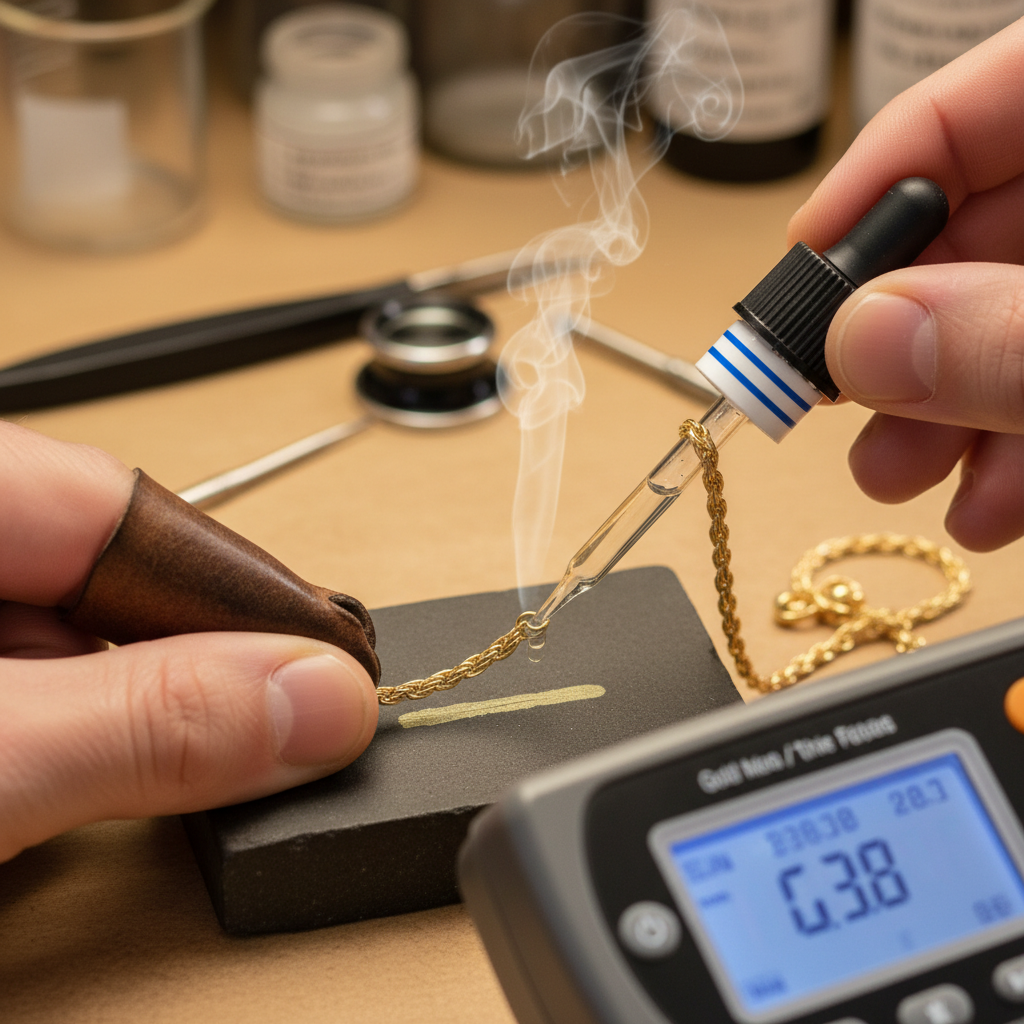
Gold-buying jewelers specialize in assessing precious-metal content accurately and efficiently. 24k is approximately 99.9% pure, 22k is ~91.6%, 18k is 75.0%, 14k is 58.5%, and 10k is 41.7%. Items are grouped by karat and weighed in grams (1 troy ounce equals 31.1035 grams). In NYC’s Diamond District—centered around West 47th Street—credible buyers use calibrated scales, touchstone/acid kits, and increasingly, XRF analyzers for non-destructive composition checks. Our experience shows that clear, visible testing builds trust and helps sellers decide confidently during the same visit.
- Core functions you should expect:
- Visual hallmark review (10k/14k/18k/22k/24k) to organize items.
- Touchstone/acid or XRF testing to verify composition.
- Precision weighing by karat group to 0.01 gram.
- Plain-English explanation tied to live market conditions.
- Immediate, obligation-free offer and secure bank transfer on acceptance.
- Common items bought: Rings, chains, bracelets, earrings, pendants, broken jewelry, dental gold, coins, and small bars.
- Documentation that helps: Appraisals, receipts, or insurance schedules; photos of hallmarks; designer stamps (e.g., a branded clasp) can influence evaluation.
Why Choosing the Right Gold-Buying Jeweler Matters
The right buyer protects value, privacy, and time. With JS Diamonds Inc, you get expert testing, private appointments, and immediate bank transfer—avoiding risky mail-ins or rushed counter offers. Transparent methods ensure you understand purity, weight, and market context before deciding.
Security and clarity drive better outcomes. Appointment-based sessions keep your valuables out of crowded retail traffic, while professional testing—performed in front of you—minimizes uncertainty. Our team has served 2,500+ clients with a 98% retention rate since 2010 and handles 10,000+ diamonds annually; that wholesale-level rigor extends to precious metals. For estate or mixed-karat lots, we separate by hallmark, verify with touchstone or XRF, and confirm weights by group. This discipline is crucial when items include hollow chains, solder repairs, or steel springs that can skew results if not identified.
- Trust signals to look for:
- Visible scales and test methods explained in real time.
- Clear documentation for your records.
- Private office setting in a professional building (not a kiosk).
- Speed without pressure: Same-day decisions with an obligation-free offer; no hard sells.
- Breadth of expertise: Ability to recognize mixed metals, vintage findings, and designer hallmarks.
How Selling Gold Works at a Reputable Jewelry Buyer
Bring your items and any paperwork. The jeweler checks hallmarks, verifies karat, weighs each group, and explains how the live market informs the offer. If you accept, you’re paid immediately by secure bank transfer with documentation for your records.
A smooth evaluation follows five clear steps: appointment scheduling, intake and hallmark review, verification testing (touchstone/acid or XRF), precision weighing by karat group, and a same-day offer. Most sellers complete this cycle in under an hour, depending on item count and complexity. Our process is tailored for New Yorkers who want a discreet, efficient experience in Midtown—no shipping delays, no uncertainty about who’s handling your jewelry, and no guesswork about what you’re being offered or why.
- Share details and book: Send brief descriptions and photos. Choose a time that avoids Midtown peaks.
- Intake and hallmark review: We sort items by visible marks (10k/14k/18k/22k/24k) before testing.
- Verification testing: Touchstone/acid or XRF confirms composition; magnets spot non-gold parts.
- Precision weighing: Each group is weighed to 0.01 gram on calibrated scales.
- Offer and payout: We present an obligation-free offer. If you accept, we issue an immediate bank transfer.
Pro tip: Grouping by karat ahead of time shortens your in-office time and keeps the evaluation focused.
Types of Gold Items and Testing Methods
Buyers separate items by karat, verify with touchstone/acid or XRF, and weigh accurately. Hollow chains, vintage clasps, and soldered joints can affect readings, so experienced handling ensures fair, clearly explained results.
Testing aims to identify the metal content without damaging your jewelry. Touchstone/acid methods remove only a trace from an inconspicuous area, while XRF analyzers provide a non-destructive readout in seconds—useful for complex alloys or pieces with uncertain stamps. Because many chains are hollow and clasps may differ in karat, experienced buyers test and weigh components separately for transparency. For coins and bars, composition is straightforward, but numismatic interest can change strategy; if a coin shows collectible potential, we discuss options instead of treating it strictly as melt.
- Common gold items we evaluate:
- Wedding sets, signet and cocktail rings, tennis and charm bracelets.
- Hoop and stud earrings, pendants, lockets, and religious pieces.
- Broken chains, single earrings, clasps, and repair scrap.
- Gold coins and small bars (bullion vs. collectible considerations).
- Testing overview:
- Touchstone/acid: Fast, reliable when done by pros; minimal surface abrasion.
- XRF analyzer: Non-destructive composition analysis for complex cases.
- Magnet check: Finds steel springs or non-gold findings in jewelry.
- Reference metrics: 24k ≈ 99.9%; 22k ≈ 91.6%; 18k = 75.0%; 14k = 58.5%; 10k = 41.7%; 1 troy ounce = 31.1035 g.
Best Practices Before You Visit a Gold-Buying Jeweler
Organize by karat, bring paperwork, and photograph items. Remove obvious non-gold parts where safe, and set realistic expectations for mixed lots. A 10-minute prep speeds your appointment and supports a clear, confident decision.
A little preparation goes a long way. Sellers who arrive with groups labeled 10k/14k/18k move faster through testing and weighing. Photos of hallmarks and designer stamps help confirm details, and a simple checklist keeps you from leaving anything behind. In our experience, this prep trims appointment time by meaningful minutes, especially with multi-piece estate lots or coin assortments. It also ensures we spend time on evaluation—not sorting—which means you get explanations and a decision sooner.
- Prep checklist:
- Group by hallmark (10k/14k/18k/22k/24k) in separate small bags.
- Bring prior appraisals, receipts, or insurance schedules.
- Photograph front, back, and hallmarks for your records.
- Note designer stamps that could influence evaluation beyond melt.
- List each group’s approximate weight if you have a household scale.
- Condition notes: Kinked hollow chains can weigh less than they appear; clasps may be different karats or non-gold.
- Timing tip: Markets shift daily; prioritize professional accuracy and clarity over chasing hourly moves.
Tools and Resources Sellers Can Use
Use simple at-home tools to organize—loupe, magnet, small scale—and rely on professional testing for definitive results. Confirm location, specialization, and appointment availability to ensure a focused, secure experience.
While you don’t need lab equipment, a few basic tools help you prepare: a 10x loupe to spot hallmarks, a soft magnet to identify steel components, and a small scale for rough grouping. Professional buyers then verify with calibrated scales to 0.01 gram, touchstone/acid sets, and XRF analyzers when appropriate. In 2026, XRF use has grown among established buyers because it delivers fast, non-destructive reads on complex alloys. What matters most is not the tool itself, but that results are explained clearly and documented for your records.
- At-home aids:
- 10x loupe for hallmark checks.
- Soft magnet to spot non-gold components.
- Small digital scale for preliminary organization.
- Professional tools you’ll see:
- Calibrated precision scales (0.01 g resolution).
- Touchstone/acid testing kits for quick confirmation.
- XRF analyzer for non-destructive composition analysis.
- Trust checks: Confirm the buyer’s Diamond District location and appointment process; review their focus on precious metals, not just general goods.
Local Tips
- Transit and timing: For 580 5th Ave #523, morning slots avoid Midtown traffic. The B/D/F/M and 7 trains near Bryant Park/5th Ave keep the walk short.
- Secure carry: Use a small pouch or organizer; keep items grouped by karat to streamline testing.
- Seasonal note: Around holidays, the District is busier; booking an appointment keeps your session private and efficient.
IMPORTANT: Private, appointment-based sessions keep your valuables secure and the process focused—ideal for estate lots or multiple groups.

Free Consultation (Soft CTA)
Have rings, chains, or coins to sell? Book a discreet appointment at our Diamond District office for an expert evaluation and a same-day offer.
Start with our brief overview in fast, secure options and see how our NYC gold buyers approach testing and payout.
Comparison: Where to Sell Gold
Specialized jewelry buyers deliver expert testing, clear explanations, and immediate bank transfer. Pawn shops primarily issue loans, and mail-in services add shipping steps and delays. For privacy, speed, and clarity, a trusted Diamond District buyer is often the best fit.
Your selling venue affects transparency and timing. In-person evaluations with a specialist allow you to watch testing, see weights, and understand the market context before deciding. That visibility is harder with mail-in kits. Pawn counters are convenient for short-term loans, but they’re not precious-metal specialists. For New Yorkers seeking a documented, one-visit sale in 2026, a professional jewelry buyer in the Diamond District typically provides the best balance of security, explanation, and speed.
| Option | Pros | Cons | Best for |
|---|---|---|---|
| Specialized jewelry buyer | On-site testing; expert explanations; immediate bank transfer | Requires in-person visit | Rings, chains, coins, estate lots |
| Pawn shop | Fast, ubiquitous | Primarily loans; less metal specialization | Short-term cash needs |
| Mail-in service | Convenient from home | Shipping risk; slower; less transparency | Those unable to travel |
For a deeper dive into seller-focused considerations, explore our take on the best place to sell gold in NYC and how different venues compare on speed and clarity.
Jewelry Shops That Buy Gold in NYC: What to Look For
Look for transparent testing in front of you, gram-accurate weighing by karat group, documented results, and immediate bank transfer. Private, appointment-based offices in the Diamond District provide secure handling and clear explanations—ideal for estate lots and mixed-karat items.
Not all buyers operate the same way. Prioritize those who demonstrate testing methods openly, use calibrated scales, and provide written documentation. Ask how they handle hollow chains, mixed-karat bracelets, or coins with potential collectible value. In our office at 580 5th Ave #523, we combine retail buying with wholesale-level rigor, which means details like solder joints or steel springs are identified and explained before any decision. That level of granularity is what turns an anxious sale into a confident one-visit experience.
- Non-negotiables:
- Visible, explained testing (touchstone/acid or XRF).
- Precision weighing to 0.01 g with groups separated by karat.
- Immediate bank transfer on acceptance and a written record.
- Nice-to-haves: Appointment scheduling, private room, and the ability to assess coins beyond melt if needed.
- Red flags: Vague testing, hidden backroom weigh-ins, or pressure to decide without explanation.
Case Studies: Real NYC Gold-Selling Scenarios
Organized sellers move faster and choose confidently. Grouping by karat, sharing photos beforehand, and bringing documentation usually leads to a same-visit decision with immediate payout—especially for estate and mixed lots.
Our experience across thousands of items shows a clear pattern: preparation and transparency speed everything up. When sellers arrive with basic grouping and a few photos, we can focus on testing and explanations. Immediate bank transfers close the loop before you leave the office. Because our team also buys diamonds, jewelry, and watches, we can flag designer stamps, suggest trade-in options, or evaluate multi-category lots in a single session—helpful when estates include gold, diamonds, and timepieces.
- Estate assortment, Midtown: Over 40 pieces spanning 10k, 14k, and 18k were sorted, spot-checked with XRF, and weighed by group. The family accepted the offer on-site and completed payout immediately.
- Damaged chains and single earrings: Despite condition issues, metal content retained value. Separate weighing of clasps and chains clarified results.
- Coins plus jewelry: Modern bullion was straightforward; a vintage coin showed collectible indicators. We discussed options rather than defaulting to melt-only logic.
FAQ
Bring ID, organize by karat, and expect on-site testing with a clear, same-day offer. You control the decision. If you accept, payout is immediate via secure bank transfer with written documentation for your records.
- How do I prepare gold jewelry for a sale?
- Group by karat, photograph pieces and hallmarks, and bring any appraisals or receipts. Removing obvious non-gold parts (when safe) reduces confusion. A simple list by karat helps the evaluation go faster.
- What affects a gold offer?
- Karat purity, total weight by group, and current market conditions. Condition and non-gold components can influence results, and designer hallmarks may matter for certain pieces.
- Is testing harmful to my jewelry?
- Touchstone testing removes a very small surface trace; XRF is non-destructive. Professionals keep any abrasion minimal and on an inconspicuous area.
- Can I get paid the same day?
- Yes. Reputable buyers provide immediate bank transfer upon acceptance, along with a written record of the transaction.
- Do you buy single earrings, broken items, or mixed lots?
- Yes. Single earrings, broken chains, clasps, and mixed-karat lots can all be evaluated by grouping and testing each category for a transparent offer.
Conclusion
Choose a trusted Diamond District jeweler that tests in front of you, weighs accurately, explains results, and pays immediately. JS Diamonds Inc provides private appointments, clear documentation, and secure bank transfers—so you can sell gold in one confident visit.
- Key Takeaways:
- Organize by karat and bring documentation to save time.
- Expect visible testing and gram-accurate weighing with groups separated.
- Immediate bank transfer is standard among reputable buyers.
- Private appointments enhance security, privacy, and focus.
- Next steps: Explore our guidance on where to sell gold in New York and schedule your appointment for a documented, same-day sale in Midtown.
For those researching further, our educational article on understanding gold jewelry value covers hallmarks, karat math, and common testing approaches.
