


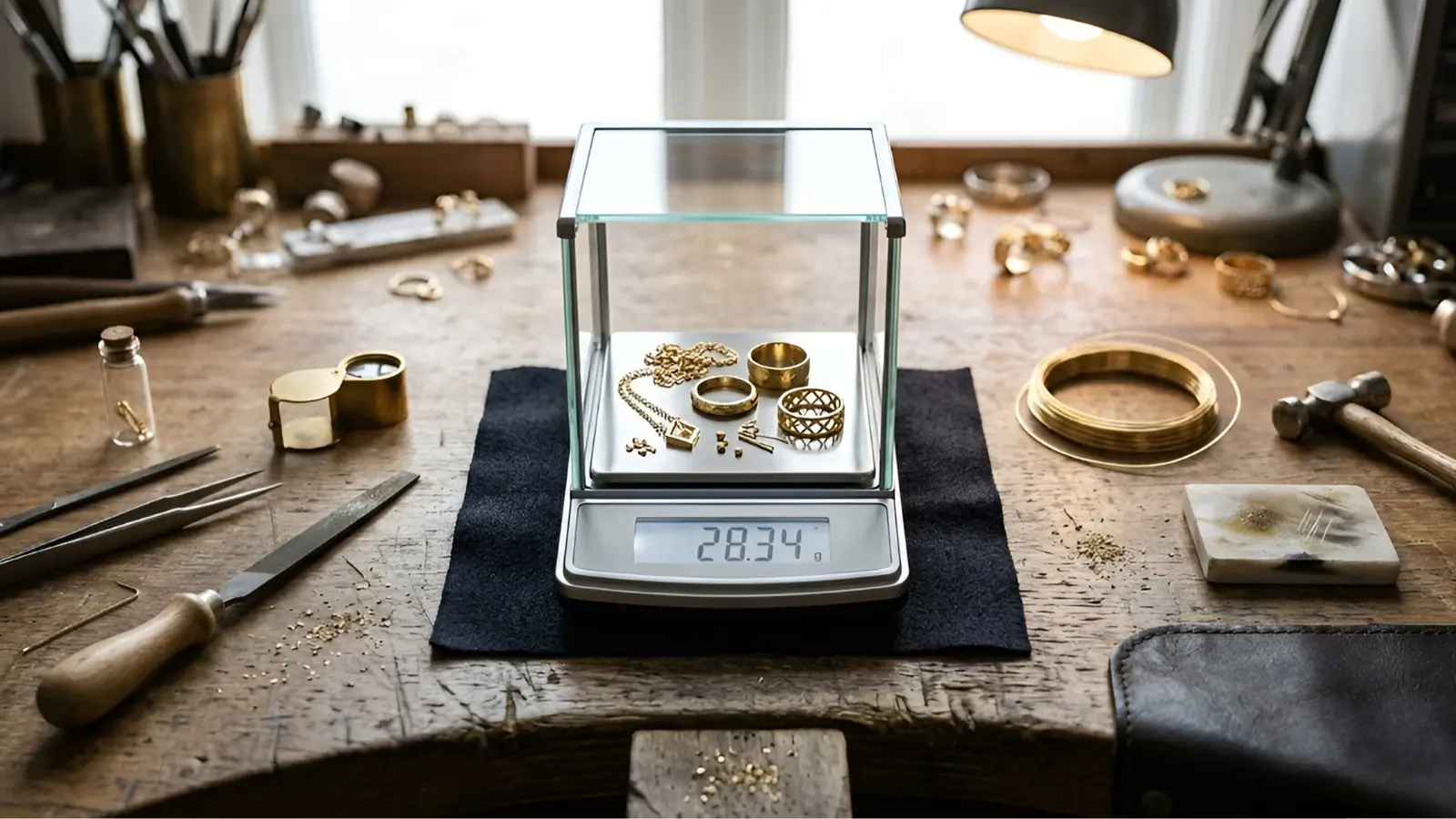
Understanding Gold Jewelry Value: What Really Determines Its Worth
Gold jewelry often feels valuable by default. It’s heavy, lustrous, and historically associated with wealth and security. Yet when people attempt to evaluate what their gold jewelry is actually worth, many are surprised by how different the real calculation is from expectations. Retail price, emotional attachment, and visual appeal rarely translate directly into market value.
Understanding gold jewelry value requires separating perception from reality. It involves knowing how gold is measured, how markets influence pricing, and why professional evaluation matters far more than assumptions. This clarity becomes especially important when jewelry is no longer worn, inherited pieces surface, or financial priorities change.
This guide explains what truly determines the worth of gold jewelry and how to assess it with confidence rather than guesswork.
Why Gold Jewelry Value Is Commonly Misjudged
One of the most common misconceptions is that gold jewelry is worth close to what it was purchased for. In reality, retail pricing includes several layers that are not recoverable in resale scenarios.
Retail prices often reflect branding, craftsmanship, and store margins—factors that do not influence intrinsic gold value. When jewelry enters the secondary market, its worth is recalculated based on material reality, not purchase history.
This gap between perceived and actual value is why many people hesitate when considering selling gold, unsure of what to expect or whether the timing is right.
The Core Drivers of Gold Jewelry Worth
Gold jewelry value is built on measurable fundamentals rather than aesthetics. Two primary components form the foundation of any evaluation: purity and weight.
Purity indicates how much of the piece is made of real gold. Higher karat gold contains a greater percentage of pure gold, while lower karat jewelry includes more alloy metals for strength and durability.
Weight determines how much gold is present overall. Even jewelry with lower purity can carry strong value if it contains enough gold by mass. These two elements together establish the intrinsic baseline before market conditions are applied.
Market Influence: Why Value Changes Over Time
Gold is a globally traded commodity, and its price responds to economic uncertainty, inflation trends, and currency movement. Jewelry values rise and fall accordingly, regardless of design or age.
This means the same necklace can have different valuations depending on when it is evaluated. Understanding the current gold selling price helps frame expectations realistically and prevents emotionally driven decisions during market highs or lows.
Market awareness doesn’t require daily tracking—but it does require context before making any major decision.
Craftsmanship, Design, and Brand: Where They Do and Don’t Matter
Craftsmanship enhances emotional and aesthetic value, but its impact on resale is limited. Unless a piece belongs to a highly sought-after designer or carries historical significance, design complexity does not substantially increase material worth.
This distinction often surprises owners who associate detailed craftsmanship with higher resale value. In practice, most gold jewelry is evaluated based on gold content rather than artistic effort.
Understanding this difference helps remove frustration from the valuation process.
Condition and Wear: A Common Source of Confusion
Unlike gemstones, gold does not lose intrinsic value due to wear. Scratches, dents, broken clasps, or outdated styles do not significantly affect gold worth.
This makes gold jewelry uniquely resilient as an asset. Even pieces that are no longer wearable retain value, which is why many people choose to sell gold jewelry they no longer use rather than letting it sit unused.
Condition matters far less than composition.
How Professionals Determine Real Gold Jewelry Value
Professional evaluation eliminates uncertainty by applying standardized methods and real-time data.
| Factor | What Is Measured | Impact on Value |
|---|---|---|
| Purity (Karat) | Percentage of pure gold | Determines gold content ratio |
| Net Weight | Actual gold mass | Directly affects base value |
| Market Rate | Current gold pricing | Sets valuation benchmark |
This structured approach ensures evaluations are factual, transparent, and consistent.
Emotional Value vs Financial Reality
Gold jewelry often holds emotional weight that financial models cannot quantify. Inherited pieces, gifts, or milestone jewelry may feel invaluable even when material value is modest.
The key is recognizing when emotional value justifies keeping a piece and when financial logic suggests letting it go. Separating these two perspectives allows decisions to feel grounded rather than conflicted.
Using Gold Jewelry as a Financial Lever
Gold jewelry can function as a flexible financial resource. It can be held, liquidated, or redirected depending on life circumstances.
For some, choosing to sell gold for cash offers liquidity during transitions such as relocations, investments, or portfolio restructuring. In these cases, the decision is less about maximizing peak pricing and more about aligning assets with current priorities.
Timing Decisions Without Chasing the Market
Attempting to time the absolute peak of gold prices often leads to hesitation or missed opportunities. A more practical approach is evaluating whether the jewelry still serves a purpose.
If it doesn’t, holding onto it purely for speculative gains may not add meaningful value. Intentional timing—rather than reactive timing—tends to produce better outcomes.
Common Myths That Distort Gold Jewelry Value
Many persistent myths lead to unrealistic expectations, including assumptions that older jewelry is always more valuable or that retail price reflects resale worth.
Understanding how value is actually calculated helps avoid these misconceptions and creates confidence in decision-making.
Frequently Asked Questions
Does higher karat gold always mean higher value?
Not always. While higher karat gold contains more pure gold, total value depends on both purity and weight. A heavier lower-karat piece can sometimes be worth more than a lighter higher-karat one.
How often does gold jewelry value change?
Gold jewelry value changes with market pricing, which can fluctuate daily. However, most people don’t need to react to short-term changes unless they are actively planning a sale.
Can damaged or broken gold jewelry still be valuable?
Yes. Damage does not significantly affect gold’s intrinsic value. Broken pieces are commonly evaluated based on gold content rather than appearance.
Should I rely on online gold calculators?
Online calculators can provide rough estimates, but they cannot replace professional evaluation. Factors such as exact purity, net weight, and market adjustments require expert assessment.
Is it better to evaluate all gold jewelry together or separately?
Evaluating pieces separately often provides clearer insight into where value lies, especially when jewelry varies in purity and construction.
How JS Diamonds Helps You Understand True Gold Value
At JS Diamonds, we help clients understand what truly determines gold jewelry value—without pressure or assumptions. Our evaluations focus on clarity, transparency, and education, ensuring you know exactly how value is calculated and why.
Whether you’re reassessing stored jewelry, exploring liquidity, or simply seeking informed perspective, our team provides honest guidance aligned with real market conditions.
For real evaluations, insights, and expert perspectives, explore JS Diamonds on Instagram and see how informed jewelry decisions take shape every day.
