


How to Tell If Gold Is Real: Simple Tests and Professional Verification Explained
Gold jewelry often carries more than just monetary value. It may represent milestones, inheritance, or years of accumulation. Yet many people aren’t entirely sure whether the gold they own is real—or how pure it actually is. This uncertainty becomes especially important when you’re considering resale, upgrades, or long-term value.
With counterfeit jewelry and gold-plated items increasingly common, knowing how to identify real gold is essential. While some methods can be tried at home, others require professional verification to ensure accuracy and fairness.
This guide explains how to tell if gold is real, breaking down simple at-home tests, their limitations, and why professional evaluation ultimately provides the most reliable answers.
Why Gold Authenticity Matters More Than Ever
Gold prices fluctuate, but periods of strong pricing often prompt people to reassess what they own. Whether jewelry has been worn for decades or stored away untouched, authenticity directly impacts value.
Many people discover too late that pieces they believed were solid gold are actually plated or mixed alloys. Verifying authenticity early helps prevent disappointment and ensures informed decision-making—especially if you’re considering selling gold in today’s market.
Authenticity also matters for peace of mind. Knowing exactly what you own allows you to decide whether to keep, redesign, pass down, or sell with confidence
Understanding What “Real Gold” Actually Means
Gold purity is measured in karats, indicating how much pure gold is present in a piece. Pure gold is 24K, but jewelry is typically made with alloys for durability.
Common purity levels include:
- 24K: 99.9% pure gold (rare in everyday jewelry)
- 18K: 75% gold
- 14K: 58.3% gold
- 10K: 41.7% gold
Lower karat jewelry still contains real gold, but its value differs significantly. Understanding this distinction is crucial when evaluating authenticity and potential returns.
Simple At-Home Tests to Identify Real Gold
At-home tests can provide initial clues, but they are not definitive. They work best as screening tools rather than final confirmation.
Visual Inspection and Hallmarks
Most real gold jewelry contains stamped markings indicating purity or manufacturer details. These marks are often small and located on clasps or inner bands.
However, stamps can be misleading. Counterfeit pieces may carry false markings, while older or custom jewelry may lack them entirely.
Magnet Test
Gold is not magnetic. Placing a strong magnet near your jewelry can reveal whether other metals are present.
If the piece is strongly attracted to the magnet, it likely contains non-gold metals. However, lack of magnetism does not guarantee purity—many non-gold metals are also non-magnetic.
Skin and Wear Observation
Over time, gold-plated jewelry may show discoloration, fading, or exposed base metal. Real gold does not tarnish or change color easily.
That said, surface wear alone cannot confirm purity, especially for mixed alloys.
Why At-Home Tests Have Limitations
While home methods are helpful, they are inherently limited. They cannot accurately determine gold percentage, internal composition, or resale value.
Many people mistakenly assume that passing one test confirms authenticity. In reality, only professional testing can provide precise answers—especially for jewelry intended for resale or redesign.
Professional Gold Verification Methods Explained
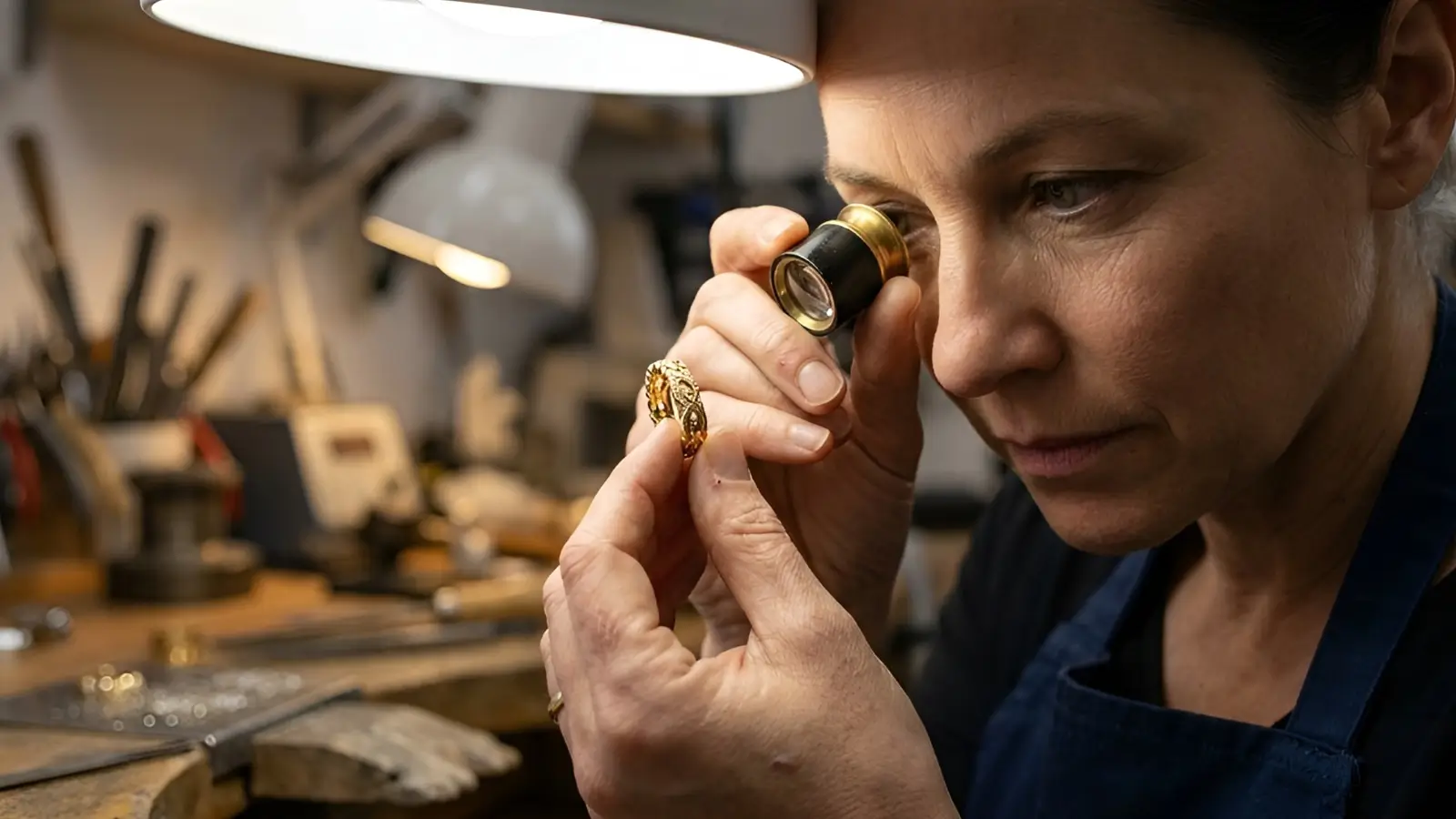
Professional evaluation removes guesswork. It combines technical testing with market knowledge to deliver accurate results.
| Testing Method | What It Determines | Accuracy Level |
|---|---|---|
| Acid Testing | Approximate purity based on reaction | High when performed correctly |
| XRF Analysis | Exact metal composition | Very high (non-destructive) |
| Weight & Density Analysis | Gold content consistency | Moderate to high |
These methods ensure that both buyers and sellers operate with full transparency.
When Professional Verification Becomes Essential
Professional testing is especially important when:
- Jewelry is inherited and undocumented
- Pieces are old, damaged, or mismatched
- You’re planning to sell old gold
- You want to understand realistic market value
Accurate verification prevents underpricing and helps you make decisions aligned with your goals rather than assumptions.
How Authenticity Impacts Resale Value
Authenticity alone doesn’t determine value—purity and weight do. A heavier 10K piece may sometimes be worth more than a lighter 18K one, depending on gold content.
Understanding this relationship helps set realistic expectations when you decide to sell gold jewelry, especially during high-demand periods.
Avoiding Common Mistakes When Testing Gold
Many people unknowingly damage jewelry through improper testing or rely on unreliable methods.
Common mistakes include:
- Scratching visible surfaces
- Using household acids
- Trusting stamps without verification
These actions can reduce value or lead to incorrect conclusions.
How Gold Verification Fits Into Larger Jewelry Decisions
Verification isn’t just about selling. It also informs decisions about redesigning, insuring, or passing jewelry to future generations.
Knowing what you own allows you to choose the best path forward—financially and emotionally.
Frequently Asked Questions
Can gold-plated jewelry ever be mistaken for real gold?
Yes, especially if the plating is thick or the piece carries misleading stamps. Gold-plated items may pass visual inspections but fail professional testing. Only proper verification can confirm whether gold is solid throughout or merely surface-level.
Is professional testing safe for delicate or antique jewelry?
Modern testing methods, especially XRF analysis, are non-destructive and safe for delicate or antique pieces. Experienced professionals take precautions to preserve both structural and aesthetic integrity during evaluation.
How long does professional gold verification take?
Most evaluations are completed within minutes, depending on the method used. Advanced testing may take slightly longer, but results are typically immediate and clearly explained.
Do I need original receipts or certificates for verification?
No. While documentation can help, it is not required. Skilled evaluators can assess gold purity and composition without prior paperwork.
Why do two gold pieces of the same karat have different values?
Differences in weight, construction, and additional materials affect overall value. Karat indicates purity, not total gold content, which is why professional evaluation matters.
How JS Diamonds Helps You Verify and Value Gold Accurately
At JS Diamonds, we specialize in transparent gold and jewelry evaluations backed by professional testing and market expertise. Whether you’re verifying authenticity, understanding purity, or exploring resale options, our approach prioritizes clarity and education—never pressure.
We work with individuals looking to evaluate, sell, or transition gold jewelry with confidence. Our team ensures you understand exactly what you own and how its value is determined.
For insights, evaluations, and real-world examples, explore JS Diamonds on Instagram and see how informed jewelry decisions are made every day.
