


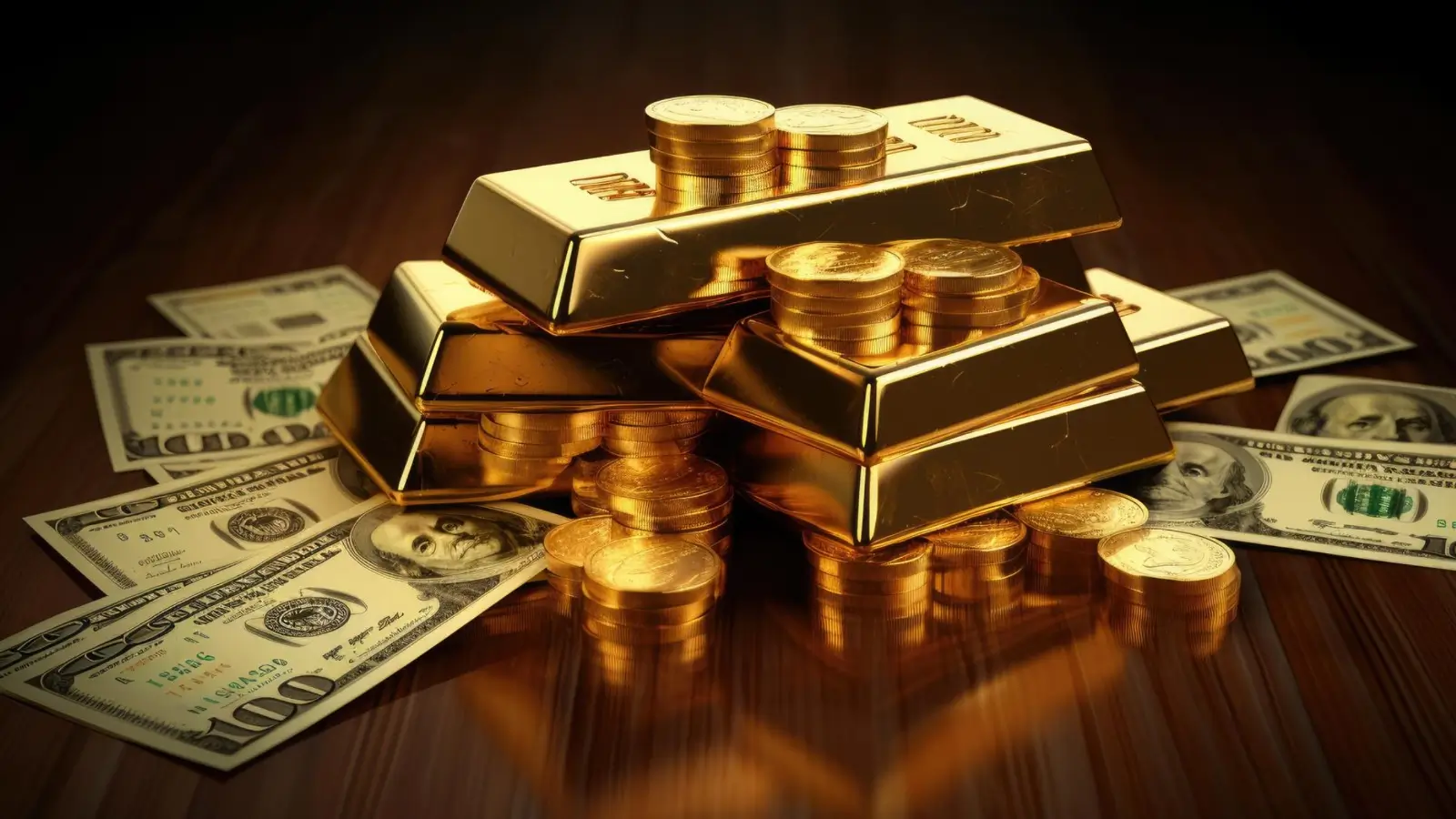
Gold has always occupied a unique position in personal finance. It is worn, gifted, inherited, and admired, but it is also stored, liquidated, and relied upon during uncertain economic periods. In today’s high-price market, many people are reassessing their gold jewelry not just as adornment, but as an asset with real financial potential.
As gold prices continue to fluctuate at elevated levels, questions naturally arise: How does gold jewelry perform as an asset? When does it make sense to liquidate? And how should owners evaluate returns beyond emotional value?
This guide explores gold jewelry from an asset perspective – helping you understand how value is calculated, when returns are strongest, and how to make informed decisions in a high-price environment.
Why Gold Jewelry Behaves Differently From Other Assets
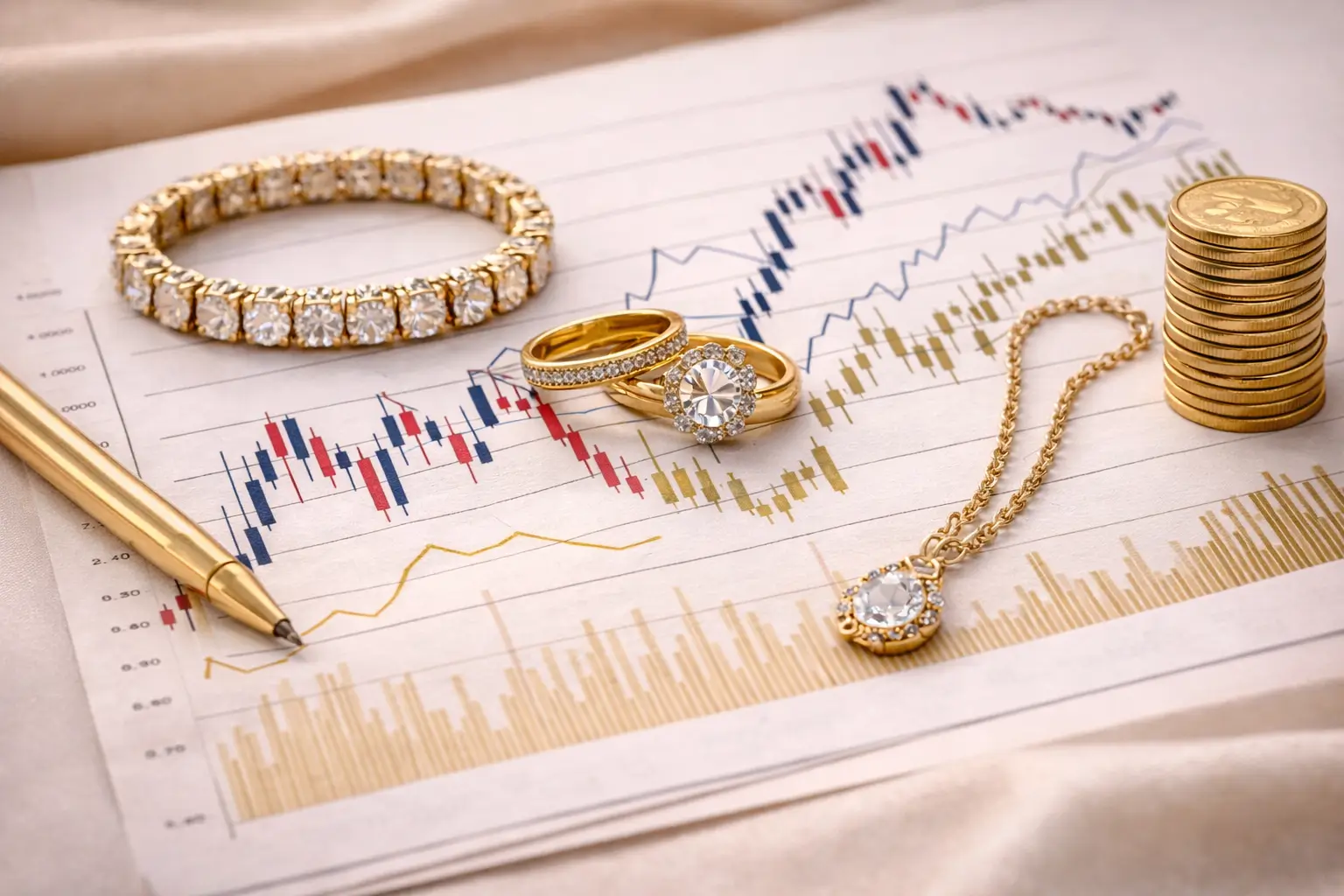
Unlike stocks, real estate, or even bullion, gold jewelry occupies a hybrid space. It combines intrinsic material value with craftsmanship, wearability, and emotional attachment. This dual nature affects how returns should be evaluated.
From an asset standpoint, gold jewelry is influenced by:
- Global gold prices
- Purity and weight
- Market demand
- Condition and usability
However, unlike pure investment instruments, jewelry also carries sunk costs related to design, labor, and brand—factors that may not always translate directly into resale value.
Understanding this distinction is essential when assessing realistic returns.
The Relationship Between Market Prices and Jewelry Value
When gold prices rise, attention often shifts toward liquidation opportunities. High market prices increase the base value of gold jewelry, particularly for pieces with higher purity and substantial weight.
That said, jewelry does not always track gold prices in a linear way. While bullion responds immediately to market changes, jewelry valuations depend on how easily the gold can be refined, reused, or resold.
In high-price markets, experienced diamond buyers in NYC and gold evaluators often see increased activity – not because all jewelry suddenly becomes profitable, but because the underlying material value becomes more attractive relative to holding costs.
Evaluating Returns: What Actually Drives Value
Returns on gold jewelry are best understood by breaking them into tangible and intangible components.
Tangible factors include:
- Karat purity (10K, 14K, 18K, etc.)
- Gross and net weight
- Current market pricing
- Condition and separability of components

Intangible factors include:
- Emotional attachment
- Wearability
- Replacement cost
- Historical or personal significance
From a purely financial perspective, returns are strongest when jewelry is evaluated primarily for its gold content rather than its original retail price.
Gold Jewelry vs Other Forms of Gold Ownership
Many people assume gold jewelry and bullion perform similarly as assets, but their return profiles differ significantly.
| Gold Form | Liquidity | Return Predictability | Emotional Value |
|---|---|---|---|
| Gold Jewelry | Moderate | Variable | High |
| Gold Bullion | High | High | Low |
| Gold Coins | High | Moderate | Moderate |
This comparison highlights why gold jewelry should be viewed as a flexible asset rather than a pure investment vehicle.
Timing Matters More Than Most People Realize
One of the most overlooked aspects of maximizing returns is timing. Gold prices move in cycles, and high-price markets tend to attract increased selling activity.
When many sellers enter the market simultaneously, competition can compress margins. Strategic timing—rather than emotional urgency—often results in better outcomes.
Understanding the gold selling price at the time of evaluation helps frame expectations realistically and prevents reactionary decisions based on headlines alone.
When Liquidity Becomes the Priority
There are moments when holding jewelry no longer aligns with financial goals. Life changes, portfolio rebalancing, or shifting priorities can all prompt reassessment.
In such cases, liquidity often outweighs sentiment. Choosing to sell gold for cash provides immediate flexibility, allowing owners to redirect value into areas that better serve their current needs.
For many, this decision isn’t about abandoning emotional value—it’s about recognizing when the asset’s role has changed.
Selling vs Holding: A Strategic Perspective
The decision to liquidate gold jewelry shouldn’t be based solely on price peaks. Instead, it should reflect how the asset fits into your broader financial picture.
Ask yourself:
- Is this jewelry actively worn or stored away?
- Does it serve a future purpose?
- Would its value be better utilized elsewhere?
When jewelry no longer aligns with lifestyle or goals, selling gold becomes a strategic choice rather than a loss.
The Role of Professional Evaluation
Transparent evaluation is critical in high-price markets. Without clear explanations of weight, purity, and pricing methodology, it’s difficult to assess whether an offer reflects fair value.
Reputable professionals who regularly work with those looking to sell gold jewelry can explain:
- How purity impacts pricing
- Why deductions may apply
- What market conditions influence offers
Clarity empowers better decision-making.
Gold Jewelry as a Transitional Asset
For many people, gold jewelry serves as a transitional asset—holding value until it is redirected into something more relevant.
This could mean reallocating funds, upgrading other assets, or simplifying collections. In these scenarios, selling gold is less about market timing and more about intentional transition.
The key is ensuring that transition is informed, transparent, and aligned with long-term priorities.
FAQs
Is gold jewelry a good long-term asset compared to other investments?
Gold jewelry holds value well over time due to its intrinsic material worth, but it should not be treated as a primary investment vehicle. Unlike stocks or bullion, returns vary widely based on purity, condition, and market demand. It works best as a supplementary or transitional asset rather than a growth-focused investment.
How does craftsmanship affect resale value in a high-price market?
Craftsmanship contributes to emotional and aesthetic value but often has limited impact on resale returns unless the piece is from a highly sought-after designer. In most cases, resale value is driven more by gold content than by original craftsmanship costs.
Should I wait for prices to rise further before selling?
Waiting can sometimes increase returns, but it also introduces risk. High prices often bring increased selling activity, which can affect demand. The better approach is to sell when the asset no longer aligns with your financial goals rather than attempting to time the absolute peak.
Does damaged or broken gold jewelry still hold value?
Yes. Gold jewelry retains value regardless of condition because pricing is based on material content. Broken or outdated pieces often perform just as well as intact ones when evaluated for gold weight and purity.
How can I ensure I receive fair value when selling gold jewelry?
Fair value comes from transparency. Choose professionals who clearly explain how pricing is calculated, provide real-time market references, and allow you to make decisions without pressure. Understanding the evaluation process is just as important as the final number.
How JS Diamonds Supports Informed Gold Decisions
At JS Diamonds, we help clients understand the true value of their gold jewelry in today’s market. Our approach is rooted in transparency, education, and respect for both emotional and financial considerations.
Whether you’re evaluating gold as an asset, exploring liquidity options, or reassessing your collection, we provide clear guidance without pressure. Our team works with individuals seeking accurate evaluations and informed outcomes—not rushed transactions.
To see real insights, evaluations, and behind-the-scenes perspectives, explore ✨ @foreverringsbysal ✨ and stay connected with how fine jewelry decisions evolve in real time.
