



GIA approved diamonds are diamonds graded by the Gemological Institute of America with a unique report number and standardized 4Cs evaluation. In New York, JS Diamonds Inc appraises and buys these stones through an expert, discreet process—helping you verify authenticity, understand value, and make confident decisions whether you’re selling, upgrading, or buying.
By JS Diamonds Inc — Last updated: 2026-05-26
Overview and Table of Contents
This guide explains what “GIA approved” really means, how GIA grading works, and how to verify a report. You’ll learn value drivers, see NYC-specific tips, compare labs, and get practical steps to sell, trade, or buy with confidence at JS Diamonds Inc.
Here’s how to use this complete guide quickly.
- What “GIA approved” means and why it matters for New York sellers and buyers
- How GIA grades diamonds: the 4Cs, fluorescence, cut precision, and inscriptions
- Natural vs lab-grown, and how GIA compares with other labs
- Step-by-step verification of a GIA report and inscription
- NYC best practices to sell, upgrade, or buy through JS Diamonds Inc
- Tools, resources, and case examples from recent Manhattan appointments
What Are “GIA Approved” Diamonds?
“GIA approved” diamonds refers to stones evaluated by the Gemological Institute of America and issued a GIA grading report. Each report assigns a unique number, documents the 4Cs, and often corresponds to a laser inscription on the diamond’s girdle for secure identification.
In everyday conversation, buyers and sellers use “GIA approved” to mean GIA graded or GIA certified. While GIA technically issues reports—not “certificates”—the market recognizes GIA as a global standard for objective grading.
Key identifiers help you spot genuine GIA-graded stones fast.
- Unique report number: Typically 10–15 digits, tied to a specific stone.
- Laser inscription: Many GIA stones have the report number etched on the girdle for visual match.
- 4Cs documented: Carat (1 carat ≈ 0.2 grams), Color (D–Z scale), Clarity (FL–I), Cut (Excellent–Poor for rounds).
- Report formats: Digital report with QR code lookup and a PDF summary you can download.
For New York clients at JS Diamonds Inc, these markers speed up authentication, streamline appraisals, and enable same-day offers once a stone’s identity and characteristics are confirmed.
Why Certification Matters in NYC
Certification matters because it standardizes quality, reduces disputes, and accelerates transactions. In a fast-moving NYC market, GIA documentation helps sellers secure competitive, obligation-free offers and helps buyers compare apples-to-apples on cut precision, color grade, and clarity.
Consistency is everything when time is limited—especially for inherited rings or estate pieces. With a GIA report, two experts reading the same grades on the same stone can discuss value using the same language, from “VS1” clarity to “Excellent” cut.
Three practical reasons New Yorkers lean on GIA documentation when working with JS Diamonds Inc:
- Speed: Report numbers and 10× loupe checks confirm identity quickly, keeping appointments efficient.
- Trust: Standardized D–Z color and FL–I clarity scales reduce second-guessing and buyer skepticism.
- Liquidity: GIA-graded rounds (57–58 facets) with strong cut grades typically attract more interest.
In our experience evaluating stones in Midtown appointments, a clear report and visible inscription often shorten the evaluation window from a lengthy back-and-forth to a focused discussion on the 4Cs and market conditions—so you can get to an offer and decision sooner.
How GIA Grading Works: The 4Cs and Beyond
GIA grades diamonds by measuring the 4Cs—Carat, Color, Clarity, and Cut—under controlled conditions with 10× magnification, calibrated lighting, and standardized master stones. Reports can also include fluorescence, proportions, symmetry, and polish to describe a diamond’s performance.
Here’s how each component contributes to value and appearance.
Carat weight (size, measured precisely)
- Unit: 1.00 carat equals 0.2 grams, measured to two decimal places on precision scales.
- Why it matters: Small differences (e.g., 0.98 vs 1.00) can influence market attention and settings.
- Action: Bring documentation and any prior appraisals; we confirm carat on a calibrated scale.
Color (D–Z scale)
- D–F are colorless; G–J near-colorless; lower grades show warmer tones.
- Why it matters: Visible body color can soften brilliance; settings affect perception.
- Action: Ask to see the stone against neutral backgrounds under daylight-equivalent lighting.
Clarity (FL to I)
- Scale: Flawless (FL), Internally Flawless (IF), VVS, VS, SI, Included (I), assessed at 10×.
- Why it matters: Inclusion type, size, and position influence sparkle and durability.
- Action: Review the clarity plot; locate inclusions with a loupe and verify they match the diagram.
Cut (for rounds: Excellent to Poor)
- Proportions: Table %, depth %, crown and pavilion angles drive light return.
- Finish: Symmetry and polish grades affect scintillation and fire.
- Action: Prioritize cut—round brilliants with Excellent/Very Good often outperform higher color but weaker cut.
Beyond the 4Cs, GIA includes fluorescence (None to Very Strong), measurements (in millimeters), girdle thickness, and culet size. These technical data points give a multi-dimensional profile so professionals can compare two stones on more than weight alone.
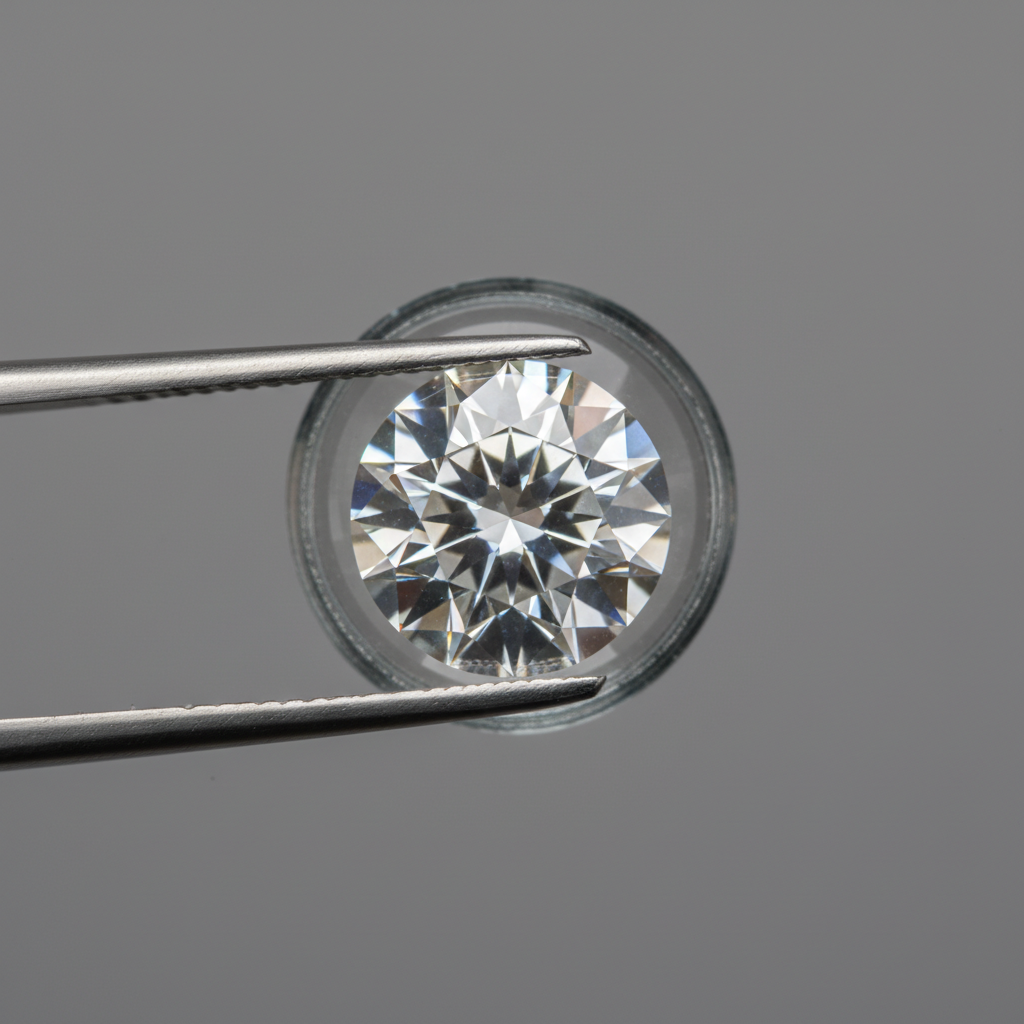
Types of GIA-Graded Diamonds: Natural vs Lab-Grown
GIA now grades both natural and laboratory-grown diamonds. Reports clearly state origin, with lab-grown produced by HPHT or CVD methods. Origin disclosure ensures buyers and sellers can price, insure, and represent stones accurately in New York’s competitive market.
Origin clarity prevents confusion and builds trust during resale conversations.
- Natural diamonds: Formed over billions of years; GIA reports list traditional 4Cs and details like fluorescence.
- Lab-grown: Created via High Pressure High Temperature (HPHT) or Chemical Vapor Deposition (CVD); modern reports mark origin prominently.
- Instruments: Spectroscopy and imaging help labs distinguish origin and treatements.
For clients exploring options, we often compare a natural VS2/G near-1.00 ct round to a lab-grown with similar 4Cs. The side-by-side highlights how cut proportions, not just origin, control brilliance. When you’re ready to select, our Find a Diamond page streamlines shortlisting.
Want reading on origin nuances? Explore this concise lab-grown overview for additional context on production methods and characteristics.
GIA vs Other Labs (and Why It Matters)
GIA is widely regarded for consistency and strict grading. Other labs, like IGI, also grade diamonds, but report formats and tolerances can differ. Understanding these differences helps you compare stones fairly and set accurate expectations when selling or upgrading in NYC.
We regularly review reports from multiple labs during Manhattan appointments. Aligning terminology is step one; assessing equivalence is step two. The table below summarizes key distinctions you’ll encounter.
| Feature | GIA | IGI/Other Labs | Uncertified |
|---|---|---|---|
| Grading consistency | High; industry benchmark | Varies by lab/location | N/A; subjective |
| Report lookup | Digital verification via report number/QR | Available on many labs | None |
| Laser inscription | Common; matches report | Common but formats differ | Absent or unknown |
| Market trust (NYC) | Broadly recognized | Recognized; standards vary | Limited; requires in-depth testing |
If you’re comparing a GIA Excellent cut to a non-GIA round with similar stats, inspect table %, depth %, and symmetry notes side-by-side. For deeper background on certification principles, see this plain-English primer.
How to Verify a GIA Report (Step-by-Step)
Verify a GIA report by matching the report number on paper or PDF to the diamond’s laser inscription, then confirming 4Cs details under 10× magnification. Use digital lookup to validate the number and measurements. Consistency across all three confirms identity.
Bring any documentation you have—original report, PDF, appraisal, or purchase receipt. At JS Diamonds Inc, we follow a clear, documented process:
- Locate the number on the report or PDF.
- Find the inscription on the diamond’s girdle using a microscope or 10× loupe.
- Check 4Cs: carat, color, clarity, and cut grades match exactly.
- Confirm measurements (millimeters) and shape (e.g., 6.5–6.6 mm for a ~1.0 ct round).
- Digital lookup: Enter the number in the lab’s online database to verify.
When a report is missing, we can still evaluate the stone using instruments, known master stones, and advanced magnification. If you’re planning to sell, scheduling a quick sell diamonds in New York appointment helps you understand options, including re-cutting or re-setting to showcase cut performance.
Best Practices for Buying or Selling in New York
For New York transactions, organize documents, inspect inscriptions, and prioritize cut precision. Work with an appointment-based buyer like JS Diamonds Inc for privacy, expert evaluation, and immediate bank transfer once you accept an obligation-free offer.
Here’s a streamlined playbook we use with clients from Manhattan and the outer boroughs.
- Prepare essentials: Bring the ring, loose stone, and any prior paperwork or receipts.
- Verify identity: Confirm the laser inscription matches the report number.
- Inspect cut: For rounds, watch table %, depth %, symmetry, and polish; for fancy shapes, evaluate outline and light return.
- Assess condition: Look for chips, abrasions, or loose prongs that can be addressed via repair.
- Consider upgrades: If you’re trading in, align on size, color, or cut goals before browsing options.
- Close securely: Choose immediate, secure bank transfer upon acceptance—fast and traceable.
Local considerations for New York
- Peak appointment times often cluster around lunch hours and after work; book early for the fastest visit.
- Winter coats and gloves can make inspections clumsy—pack the ring and report in a small pouch to avoid drops.
- For estate pieces, plan a second visit to review options like stone recutting or a trade-in upgrade pathway.
If you want a practical framework before your visit, our quick guide to selling loose diamonds tips covers preparation, documentation, and evaluation signals we look for.
Value and Pricing Factors (No Dollar Amounts)
Value depends on documented grades, cut precision, market demand, and condition. In NYC, GIA-graded stones with strong cut, balanced color/clarity, and clean inscriptions tend to earn wider interest. Settings, recutting potential, and provenance can further influence outcomes.
Think in terms of drivers, not numbers. During a JS Diamonds Inc appointment, we consider:
- Documented identity: GIA number, measurements (e.g., 6.50–6.55 × 3.95 mm), fluorescence, and inclusion map.
- Cut efficiency: Round brilliants with Excellent/Very Good proportions often display stronger brightness and fire.
- Color and clarity balance: Many buyers prefer near-colorless (G–I) with VS–SI clarity that’s eye-clean at 10–12 inches.
- Condition: Minor chips or abrasions can be addressed through repair or re-polish pathways.
- Market context: Seasonal demand, design trends, and New York’s fast-paced resale environment.
We never publish prices because every stone is unique. Instead, we explain our evaluation so you understand why a stone’s proportion set or inclusion pattern shapes the final outcome.
Tools and Resources for Smarter Decisions
Use a 10× loupe, neutral lighting, and digital report lookups to confirm identity and quality. Complement with professional instruments during appointments. Curated reading on certification and origin can further sharpen your eye before you sell or buy.
Quick resources we often share with clients preparing for an appointment:
- Shortlist stones using our Find a Diamond tool to compare specs side-by-side.
- Refresh certification basics with this accessible diamond certification guide.
- Review lab-grown background via a clear origin comparison to understand HPHT vs CVD.
If you prefer a conversation, we’re appointment-based for privacy and focus. Bring your questions—we’ll walk through each spec on the report and show you what it means under the loupe.
Case Studies and NYC Examples
Real New York scenarios show how documentation and preparation change outcomes. With GIA report numbers, inscription checks, and clear goals, clients move faster—whether selling an engagement ring, upgrading a center stone, or choosing a loose diamond with balanced 4Cs.
Example 1: Selling a GIA-graded engagement ring
A Manhattan client brought a GIA report with a 10-digit number and an Excellent cut round. The inscription matched, measurements aligned (6.5 mm range), and inclusions were minor feathers at the edge. We confirmed identity in minutes and presented an obligation-free offer with immediate bank transfer available upon acceptance.
Example 2: Trade-in and upgrade
A New York client wanted to move from a near-1.00 ct G–SI1 to a brighter-looking stone. After reviewing table and depth percentages, we identified a new round with tighter proportions. The upgrade pathway used their trade-in value, and our loose diamonds selection helped finalize the choice.
Example 3: Verifying a lab-grown report
A seller presented a lab-grown stone with a digital report showing CVD origin. The inscription was crisp; color and clarity matched under 10×. We discussed the resale context and options, including a potential re-polish to address faint facet abrasions before re-setting.

How JS Diamonds Inc Helps New Yorkers
JS Diamonds Inc offers a four-step, private process: share details, book an appointment, receive a transparent offer, and get paid instantly via secure bank transfer. We also support repairs, trade-ins, upgrades, and stone recutting to highlight cut performance.
Our team blends wholesale manufacturing insight with retail buying experience. That means we don’t just read grades—we analyze proportions, inclusion types, and setting condition, then explain how each factor shapes real-world appearance.
- Appointment-based privacy: Discreet visits in New York—ideal for high-value pieces.
- Honest evaluations: Clear rationale for offers; no hidden fees.
- Immediate payment: Secure bank transfer available once you accept.
- Beyond buying: Jewelry repair, trade-in/upgrade, and recutting services tailored to your goals.
Considering where to start? If you’re selling a diamond ring, you can schedule a New York selling appointment or explore nearby options like our West Village and Brooklyn Heights pages.
Thinking of Selling or Upgrading?
Book a private New York appointment to verify your diamond, understand value drivers, and explore trade-in or upgrade paths. Bring any GIA reports or appraisals—our experts will walk you through each detail and provide an obligation-free offer.
Soft CTA
- Prepare your report number and any receipts.
- Decide if you prefer selling, trade-in, or an upgrade path.
- Schedule a visit to review options in person and, if you choose, receive immediate payment.
Frequently Asked Questions
These concise answers address the most common questions New Yorkers ask about GIA-approved diamonds, verification, and how JS Diamonds Inc handles buying, trade-ins, and upgrades—without discussing prices.
Is “GIA approved” the same as GIA certified?
People often say “GIA approved” or “GIA certified,” but GIA issues grading reports rather than warranties. In practice, both phrases refer to a diamond graded by GIA with a unique report number and standardized 4Cs evaluation.
How do I check if my diamond matches its GIA report?
Match the report number to the laser inscription on the girdle, confirm the 4Cs and measurements under 10× magnification, and use the lab’s online lookup to verify the number. All three should align. If you need help, book a JS Diamonds Inc appointment.
Can lab-grown diamonds be GIA graded?
Yes. GIA grades laboratory-grown diamonds and clearly marks origin on the report. The grading scales for color and clarity are comparable, and the report will note HPHT or CVD growth methods as applicable.
What if I lost my GIA report?
We can still evaluate your diamond using professional instruments and visual inspection. In some cases, we locate the laser inscription and retrieve a digital version from the lab’s database. Bring any receipts or appraisals you have.
Do I need a report to sell my diamond in New York?
A report isn’t mandatory, but it helps. Documentation speeds authentication and may broaden buyer interest. JS Diamonds Inc provides clear evaluations either way and offers immediate bank transfer once you accept an obligation-free offer.
Key Takeaways
GIA-approved means graded and documented—giving you a reliable identity and quality baseline. In NYC, organized paperwork, inscription checks, and cut-first evaluation drive faster, clearer outcomes when selling, upgrading, or buying with JS Diamonds Inc.
- “GIA approved” = GIA graded with a unique report number and 4Cs detail.
- Verification relies on number, inscription, and digital lookup matching.
- Cut precision and condition often influence real-world appearance more than a single letter grade.
- Appointment-based evaluations protect privacy and speed decisions.
Conclusion: Your Next Step in New York
Bring your diamond and any GIA documentation to a private JS Diamonds Inc appointment in New York. We’ll verify identity, explain value drivers, and discuss sale or upgrade paths. If you accept our offer, payment can be completed immediately by secure bank transfer.
Whether you’re selling an engagement ring, exploring lab-grown options, or comparing loose diamonds, we’ll make the process clear, discreet, and efficient—so you can move forward with confidence.
