


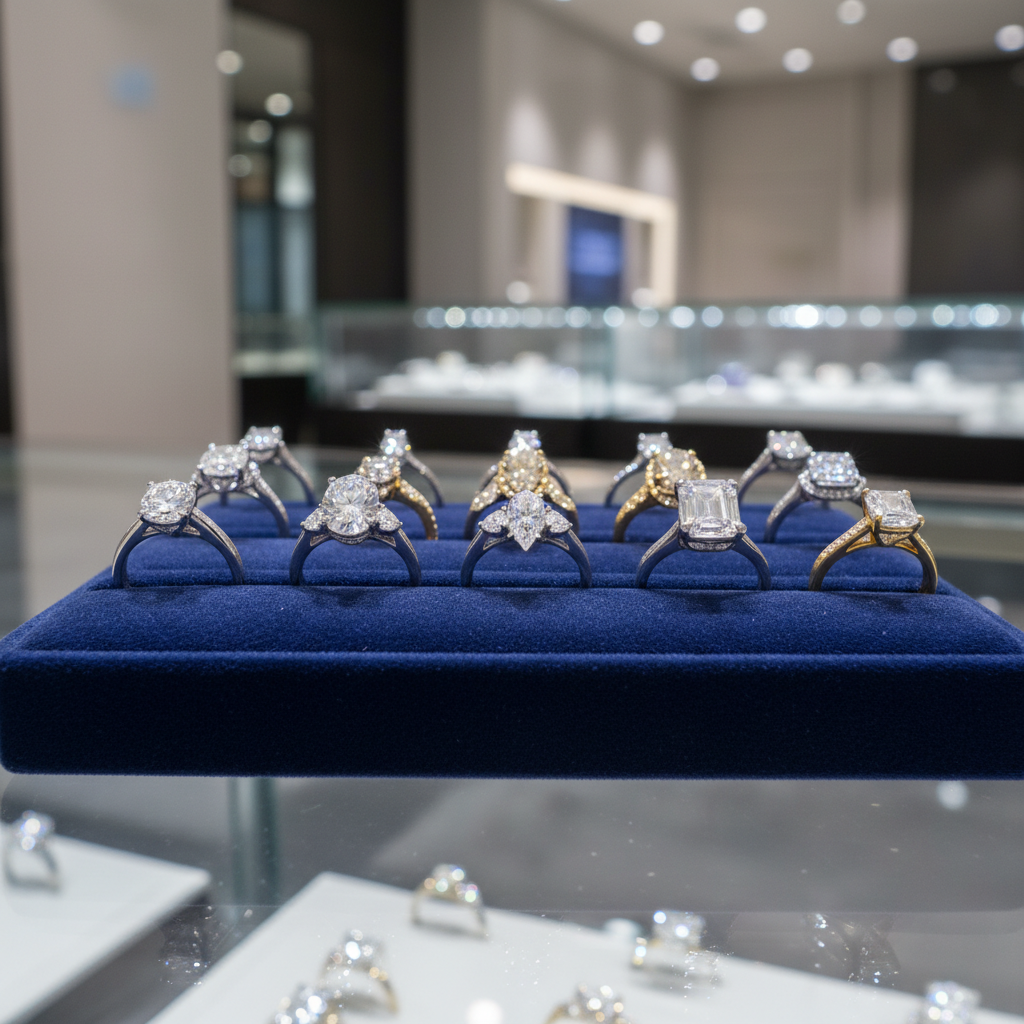
Natural diamond ring price refers to the value determined by a ring’s diamond quality (4Cs), certification, ring design, metal, brand provenance, and current market conditions. In New York’s Diamond District, transparent evaluation—paired with documentation—drives fair offers. JS Diamonds Inc uses expert grading, market comps, and immediate settlement to keep the process clear and secure.
By JS Diamonds Inc — New York’s Diamond District | Last updated: April 16, 2026
Quick Answer
In NYC, a fair natural diamond ring price is based on the 4Cs, independent certification, and real-time demand. At 580 5th Ave #523, JS Diamonds Inc evaluates your ring in person, explains each factor, and provides a transparent, obligation-free offer with immediate payment when you accept.
Above-Fold: Natural Diamond Ring Price at a Glance
Fair pricing is achieved by matching your ring’s graded qualities to current buyer demand and comparable sales. Evaluators consider cut, color, clarity, and carat first, then setting, metal, brand provenance, and fluorescence. Certified documentation speeds verification and supports stronger offers in New York’s fast-paced market.
Overview
- What you’ll learn: How natural diamond ring price is determined in 2026, what documentation matters, and how to navigate NYC’s Diamond District.
- Why it matters: Transparent pricing saves time, avoids lowball offers, and maximizes trade-in or sale outcomes.
- Who this is for: New York–area sellers and upgraders seeking expert-led guidance, discretion, and same-day payment.
What Is a Natural Diamond Ring and Its “Price”?
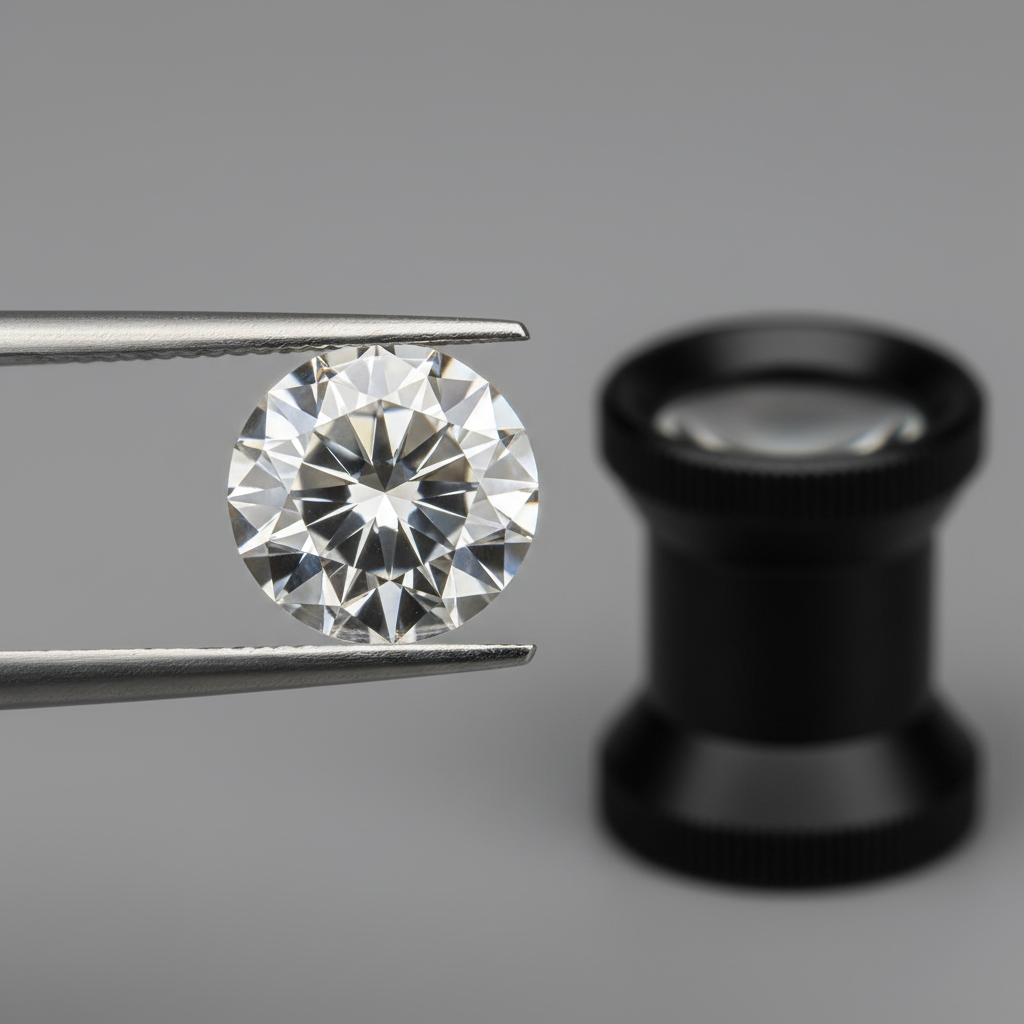
A natural diamond ring is a ring set with a diamond formed in the earth, not in a lab. Its price reflects diamond quality (4Cs), ring materials, brand provenance, condition, documentation, and market demand. For resale, value is assessed independently of retail markups and focuses on verifiable attributes and liquidity.
Key Definitions You’ll Hear in the Diamond District
- 4Cs (Cut, Color, Clarity, Carat): The global standard. Cut drives brilliance; carat is weight; color and clarity capture body color and inclusions.
- Certification: Independent grading (e.g., GIA) that verifies key attributes and supports confidence in pricing.
- Provenance & Brand: Signed designer pieces, matching paperwork, or original receipts can influence demand.
- Setting & Metal: Platinum, white/yellow/rose gold, and craftsmanship affect desirability and condition-based value.
- Resale vs. Retail: Secondary-market value is based on current demand and comps, not retail tags.
Why this matters: When you know how professionals define value, you can present your ring and documents with confidence and ask the right questions.
Where JS Diamonds Inc Fits
- Who we serve: Individuals across NYC seeking a discreet, expert-led selling or upgrade experience.
- What we do: Buy natural and lab-grown diamonds, rings, and fine jewelry; provide immediate payment via secure bank transfer.
- How we help: Explain each factor, check documentation, and outline options (sell, trade-in, recut, or repair).
In our experience, clarity on terms and process reduces stress and leads to faster, better outcomes for sellers and upgraders alike.
Why Natural Diamond Ring Price Matters Right Now
Price clarity empowers smarter decisions—whether you’re selling, upgrading, or insuring your ring. In 2025–2026, reports across the industry highlight shifting demand by shape and color grade and a widening value gap between natural and lab-grown stones, making accurate, transparent evaluations essential.
Real-World Reasons New Yorkers Ask About Price
- Selling for liquidity: Life events or portfolio rebalancing often prompt fair, fast transactions with immediate payment.
- Upgrading styles: Taste changes—switching shapes or moving from halo to solitaire is common in NYC’s trend cycle.
- Estate planning: Clear documentation and valuations help families divide or sell assets without friction.
- Insurance alignment: Ensuring coverage reflects current quality and market conditions.
The takeaway: Understanding value protects you from misinformation and helps you choose the right path—sell, trade-in, or hold.
How We See the 2026 Market
- Shape preferences shift: Rounds remain liquid; ovals and elongated shapes see strong demand for modern aesthetics.
- Cut quality wins: Bright, well-cut diamonds attract more interest regardless of carat; cut precision is a major driver.
- Certification confidence: Independent grading accelerates deals and supports stronger offers in competitive settings.
We’ve found that crisp documentation plus an eye-clean, lively diamond consistently attracts the best buyer attention.
How Natural Diamond Ring Pricing Works (Step-by-Step)
Professional buyers start with the 4Cs, validate with certification, then benchmark the diamond against active market comps. They factor in setting, metal, fluorescence, brand provenance, and condition. Clear paperwork speeds verification, enabling transparent offers and immediate settlement when you accept.
The JS Diamonds Inc Evaluation Flow
- Intake & documents: Present certificates, receipts, prior appraisals, and any service records.
- Stone verification: Confirm natural origin and assess the 4Cs using professional tools and lighting.
- Ring assessment: Inspect setting integrity, metal karat, finish, and any designer hallmarks.
- Market comps: Compare with current demand patterns in the Diamond District and broader secondary market.
- Transparent offer: We explain each factor, answer questions, and provide an obligation-free offer.
- Immediate settlement: Upon acceptance, payment is completed securely, typically the same day.
| Step | What We Check |
|---|---|
| 4Cs | Cut precision and light return, color/clarity grade, carat weight accuracy |
| Certification | Independent grading (e.g., GIA), report matching, enhancements |
| Ring Build | Metal type/karat, craftsmanship, condition, designer provenance |
| Market Comps | Current demand in NYC, shape trends, liquidity |
For a deeper dive on market dynamics, see our diamond price insights covering recent shifts in demand and grading trends.
Natural Diamond Ring Price Factors in 2026
Cut quality, verified grading, and current shape demand are the top price drivers in 2026. Eye-clean clarity, balanced color, and lively light performance keep demand strong in NYC. Documentation, renowned designers, and secure condition can further support premium outcomes.
The 4Cs, Explained with Practical Tips
- Cut: Prioritize brilliance and symmetry. Well-cut stones look larger and livelier at the same weight.
- Color: Choose balanced white appearance for your metal tone (warmer for yellow gold, icier for platinum).
- Clarity: Eye-clean is often the sweet spot; inclusions off the table are less noticeable.
- Carat: Weight affects presence and liquidity; elongated shapes may enhance face-up size.
Factors Beyond the 4Cs
- Fluorescence: Can help or hinder depending on color grade and intensity; context matters.
- Certification: Independent reports speed verification and boost buyer confidence in New York.
- Setting: Designer craftsmanship, condition, and popular styles (solitaire, halo, three-stone) affect desirability.
- Provenance: Brand signatures or documented origin can influence comparative demand.
Here’s the thing—buyers compare multiple attributes at once, so a balanced, well-presented ring with paperwork usually performs best.
Explore what we look for in rings at our NYC diamond ring buyers page for additional context on evaluations and documentation.
Types and Methods: Shapes, Settings, and Valuation Approaches
Different shapes and settings appeal to different buyers; valuation benchmarks them against active comps. Rounds are broadly liquid; ovals, cushions, and emeralds trend by season. Solitaires emphasize center-stone quality, while halos and three-stone designs add side-stone considerations.
Popular Shapes and What They Mean for Value
- Round Brilliant: Consistently liquid; cut precision is paramount.
- Oval & Elongated: Strong modern demand; face-up size often reads larger.
- Emerald & Asscher: Step cuts reward high clarity and strong make.
- Cushion & Radiant: Fire-forward; facet style and symmetry matter.
- Pear & Marquise: Stylistic, with attention to length-to-width and bow-tie.
Settings and Secondary Stones
- Solitaire: Center-stone quality is fully exposed—cut and clarity visibility matter.
- Halo: Can boost face-up presence; requires side-stone matching.
- Three-Stone: Symmetry and proportion between stones drive appeal.
- Designer Makes: Signed pieces may see stronger interest among collectors.
Valuation Methods Buyers Actually Use
- Specification-based: Convert graded attributes into comparable market ranges.
- Comps-driven: Benchmark against recent New York transactions and active buyer demand.
- Condition-weighted: Adjust for setting integrity, metal wear, and service needs.
When working with clients in Midtown, we combine all three, then walk you through the rationale before presenting an offer.
Best Practices to Maximize Your Outcome
Bring complete documentation, present a clean ring, and choose an evaluator who explains their reasoning. Time your visit to avoid rush periods, and consider options like trade-in or stone recutting if you love the ring but want more brilliance or a new look.
Preparation Checklist
- Gather papers: Independent grading, receipts, prior appraisals, repair records, and original boxes.
- Clean presentation: Lightly clean the ring; avoid harsh chemicals that might affect finishes.
- Know your goals: Sell, upgrade, or evaluate for insurance—the path shapes recommendations.
- Appointment first: Book a time at 580 5th Ave #523 for privacy and efficiency.
Options Beyond a Straight Sale
- Jewelry Trade-In & Upgrade: Swap to a new shape or size that fits current style without starting from scratch.
- Stone Recutting Services: Improve symmetry or light return (case-specific) when the diamond qualifies.
- Jewelry Repair: Restore prongs, resize, or refurbish to enhance appearance and safety.
Curious which route fits you? Our specialists discuss the trade-offs in minutes and help you pick the path that aligns with value and sentiment.
Thinking about an upgrade?
Explore your options and timeline in our Midtown office. We’ll review your ring, outline upgrade paths, and provide an obligation-free offer or trade-in quote.
Book a confidential appointment to get started.
Tools and Resources We Use (and You Can Too)
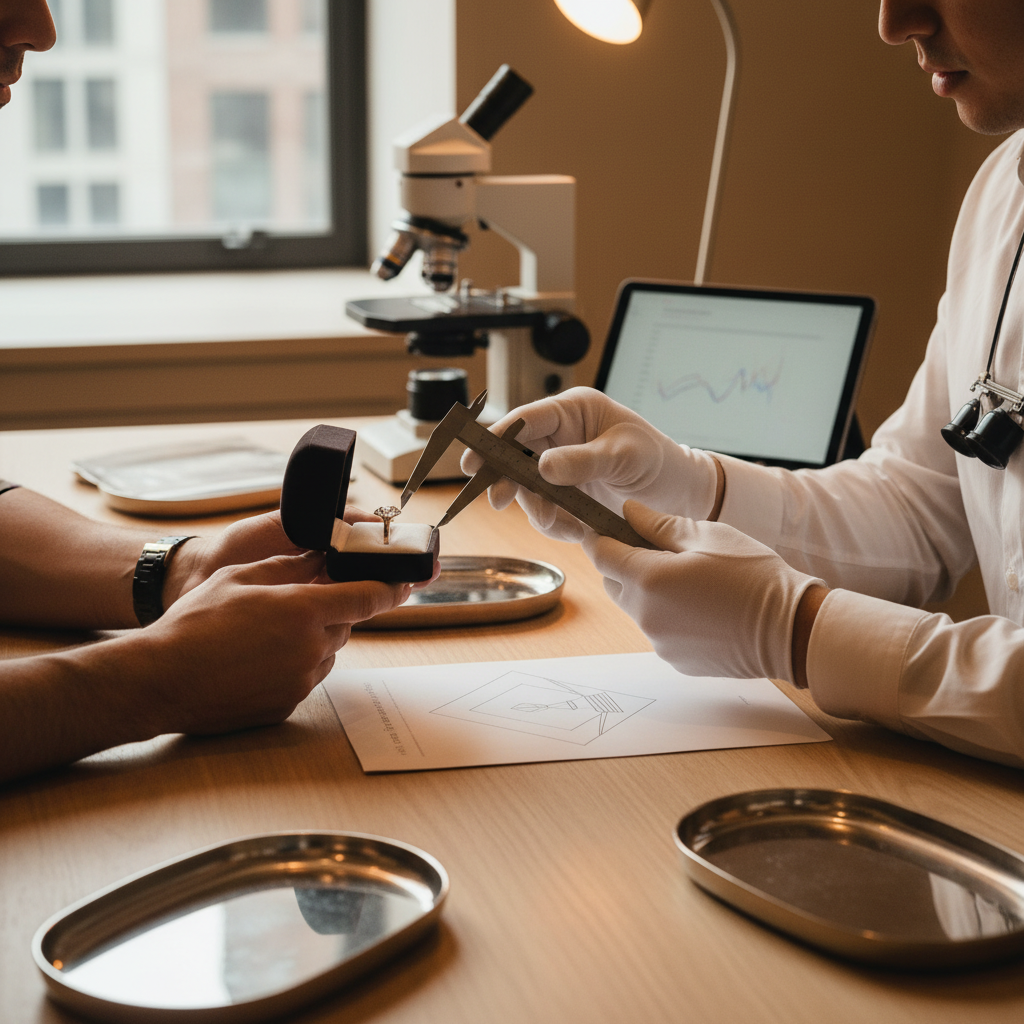
Independent grading reports, 10x loupes, precision scales, and calibrated lighting ensure an accurate read of your ring. Bringing your original paperwork speeds verification and helps align expectations with market demand during a New York evaluation.
Documents and Devices
- Grading Reports: Independent certificates verifying cut, color, clarity, and carat.
- Loupe & Microscope: Inspect inclusions and craftsmanship for condition-based adjustments.
- Calipers & Scales: Confirm measurements and weight to match documentation.
- Calibrated Lighting: Standardized viewing avoids color cast errors.
To learn more about demand patterns and documentation value, read our concise guide to selling loose diamonds fairly.
Local Tips
- Tip 1: If you’re visiting 47th Street near Rockefeller Center, plan for Midtown traffic—morning appointments often mean quicker turnarounds.
- Tip 2: Valentine’s season and late December bring volume spikes; book ahead for private appointments and faster evaluations.
- Tip 3: Bring your grading report and any repair records—NYC buyers value fast verification, which supports stronger, clearer offers.
IMPORTANT: These tips reflect our New York office operations at 580 5th Ave #523 and the expectations of local sellers seeking discretion and speed.
Case Studies: NYC Scenarios (Names Withheld)
Well-documented, lively stones with strong cut quality see faster decisions and better outcomes. In Midtown, rings with eye-clean clarity, balanced color for the chosen metal, and complete paperwork consistently attract confident offers and simpler, same-day settlements.
Scenario A: Upgrade within the Same Budget Envelope
- Situation: Owner loved the ring but wanted more sparkle without starting over.
- Approach: Evaluated recut feasibility; minor symmetry improvement plus a slim-band reset refreshed the look.
- Outcome: Achieved a brighter face-up without changing carat; client kept sentimental center stone.
Scenario B: Estate Ring with Sparse Documentation
- Situation: Family piece with no certificate.
- Approach: In-office assessment to verify origin, measure, and grade; recommended independent certification.
- Outcome: Documentation increased buyer confidence and simplified the eventual transaction.
Scenario C: Trade-In to a Trending Shape
- Situation: Client moving from cushion to oval.
- Approach: Evaluated current ring, outlined trade-in options, and previewed elongated oval inventory.
- Outcome: Streamlined upgrade aligned with current style preferences and strong local demand.
Pricing Section: 2026 Drivers and NYC Market Dynamics
In 2026, cut precision, shape trends, and credible certification dominate outcomes in New York. Industry analyses note a widening gap between natural and lab-grown resale trajectories. Well-cut, well-documented natural stones remain desirable and liquid in the Diamond District.
What We’re Seeing This Year
- Natural vs. Lab-Grown: Reports in 2025–2026 highlight diverging resale expectations; documentation is critical for setting fair expectations.
- Shape-led Demand: Elongated styles draw attention; rounds stay the benchmark for liquidity.
- Certification Confidence: Independent grading drives efficiency and trust in competitive buyer environments.
NYC-Specific Considerations
- Velocity: The Diamond District is a high-velocity marketplace; prepared sellers move faster.
- Privacy: Appointment-based evaluations reduce walk-in friction and protect confidentiality.
- Documentation: Complete paperwork reduces verification time and supports strong, transparent offers.
Natural vs. Lab-Grown: Value Snapshot
Natural diamonds hold distinct long-term demand patterns; lab-grown follows different resale dynamics. For sellers and upgraders, understanding this divergence helps set realistic expectations. Certification and cut quality remain central to outcomes in both categories.
| Aspect | Natural Diamond | Lab-Grown Diamond |
|---|---|---|
| Origin | Earth-formed | Laboratory-created |
| Documentation | Independent grading strongly recommended | Independent grading strongly recommended |
| Resale Considerations | Long-standing demand patterns in NYC | Different secondary-market dynamics |
| Key Drivers | Cut quality, liquidity, documentation | Cut quality, documentation, buyer expectations |
For practical guidance on timing and approach, our Midtown team is available to explain options—schedule a private consultation at your convenience.
How to Work with JS Diamonds Inc (NYC)
Share your ring details, bring documentation, and book a private appointment at our Diamond District office. We evaluate transparently, explain findings, and—if you choose to sell—complete secure payment immediately after acceptance.
- Tell us about your ring: Share diamond shape, approximate carat, and any available paperwork.
- Visit 580 5th Ave #523: Appointment-based evaluations for privacy and speed.
- Review and decide: We explain each factor and present an obligation-free offer or upgrade path.
- Same-day settlement: Secure bank transfer upon acceptance.
Want a broader market view before you visit? Scan our concise diamond prices overview for helpful context.
FAQ: Natural Diamond Ring Price, Documentation, and NYC Logistics
Bring your certificate and service records, book a private slot, and expect a clear walk-through of each value driver. If you’re upgrading or trading in, we’ll outline options tailored to your goals and timing.
How do I prepare my ring and documents for evaluation?
Lightly clean the ring, then gather independent grading, receipts, prior appraisals, and any repair records. Place items in a small pouch or box. Documentation speeds verification in NYC and often supports stronger, clearer outcomes during an appointment.
What if I don’t have a grading report?
We can assess the ring in-office and discuss whether independent certification is worth pursuing. Certification can improve clarity for both you and potential buyers by verifying 4C attributes and confirming natural origin.
Is trading in better than selling outright?
It depends on your goals. If you love your ring but want a new look, trade-in or stone recutting can preserve sentiment while updating style. If you’re seeking liquidity, a straightforward sale with immediate payment may be best.
Do buyers consider the setting and brand?
Yes. Metal type, craftsmanship, condition, and designer provenance influence desirability. Signed or well-crafted pieces with complete paperwork often attract more interest among New York buyers.
How quickly can I complete a transaction?
With documentation in hand and a scheduled appointment, many clients complete evaluations and—if they accept an offer—receive payment the same day via secure bank transfer, aligning with our streamlined process.
Conclusion: Your Next Step Toward a Fair Outcome
Fair value is the product of verifiable quality, market context, and transparent explanation. In New York’s Diamond District, arriving with documentation and a clear goal—sell, trade, or upgrade—helps you move confidently and efficiently.
Key Takeaways
- Documentation drives confidence: Independent grading and records speed verification.
- Cut quality leads: Lively, well-cut stones draw interest across shapes and sizes.
- NYC efficiency: Appointment-based evaluations protect privacy and save time.
- Options exist: Consider trade-in, recut, or repair in addition to an outright sale.
Ready to discuss your ring?
Book a private consultation at our Diamond District office. We’ll evaluate your ring, explain every factor, and provide a transparent, obligation-free offer—with immediate payment if you proceed.
